Advancing Hearing Technology Through Smarter Sensors and High-Efficiency Processing
How next-generation on-device sensing and compute can overcome power, latency, and noise challenges in hearing aids.
The 2.1% year-over-year increase points to continued demand for professionally fitted hearing instruments.
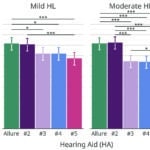
A new study looks at how premium hearing aids designed with both natural processing and AI approaches perform under the same noisy conditions.
The new pediatric line features second-generation AI sound processing, 4D user-intent sensors, and next-generation connectivity.
The in-the-ear hearing aid has now received five industry awards for its design and performance since its August 2025 launch.
The Nuance Audio parent company's first Switch: Vision Innovation Summit featured discussions on sensory wellness and the role of wearable technology in addressing both sight and hearing challenges.
Sound quality in digital hearing aids is often compromised due to signal-processing delay and the resulting “comb-filter effect.” To change this, Widex recently introduced a new solution, designed particularly for mild-to-moderate hearing losses, which employs an ultralow delay. This results in a sound quality that has, until now, been unattainable in digital hearing aids. This article describes the physics of hearing aid delay, and presents a field study on the sound quality experience of the new system.
Signia launched a new technology that enables hearing aid wearers to hear all speakers in noisy group conversations clearly.
The company’s OtoKiosk digital audiometer and Amplifon App were recognized by the UX Design Awards and iF Design Awards for user experience and innovation.