
The new hearing aid features user-activated AI for clarity in noise, while the updated fitting software features ongoing updates and is designed to enhance efficiency for hearing care professionals.
Widex, a brand known for natural sound, today is introducing its first AI hearing aid: the Allure AI RIC with Clarity Boost.
This may seem counterintuitive. One may ask, as Widex senior commercial audiology manager Sonie Harris suggested, “How do you have ‘natural’ sound with ‘artificial’ intelligence?”
But Widex is taking what it calls an intentional approach to AI that allows those with a sound preference for natural hearing to have their cake and eat it too.
To maintain the natural sound that many users prefer and have come to expect from Widex hearing aids, the new Allure AI RIC features a distinctive design that allows the user to choose when to turn on Clarity Boost AI, activating a “dedicated AI co-processor” with the push of a button. Then when users are no longer in a noisy environment, they can choose when to turn it off, and resume experiencing a more natural sound without AI processing.
“Widex Allure AI RIC resolves one of the most persistent challenges in hearing care – improving speech in noise without disrupting the natural sound quality that patients demand,” says Ngozi Amobi, head of Widex, in a release. “We’ve taken a different approach, preserving natural sound as the foundation and introducing AI processing only when it adds value.”
At the same time, Widex is launching Widex Compass Cloud 2.0, the latest evolution of its cloud-based fitting platform, which the company says is designed to strengthen fitting precision, consistency, and efficiency for hearing care professionals (HCPs).
What’s Inside the Widex Allure AI RIC: An Intentional Approach to AI
On the outside, Allure AI RIC with Clarity Boost shares the same size and form factor as the traditional Allure RIC and comes in 10 colors. On the inside, it’s also built on the Allure platform, which is powered by the proprietary W1 chip with Precision Hearing Technology to provide a natural balance of focus and awareness for daily listening. Features still include Speech Enhancer Pro, Enhanced Sound Classifier, Adaptive Dynamic Feedback Controller, Allure PureSound with ZeroDelay technology, and the Allure Dedicated Streaming Compressor.
But the Widex Allure AI RIC also provides the ability to use AI when the wearer feels it’s needed.
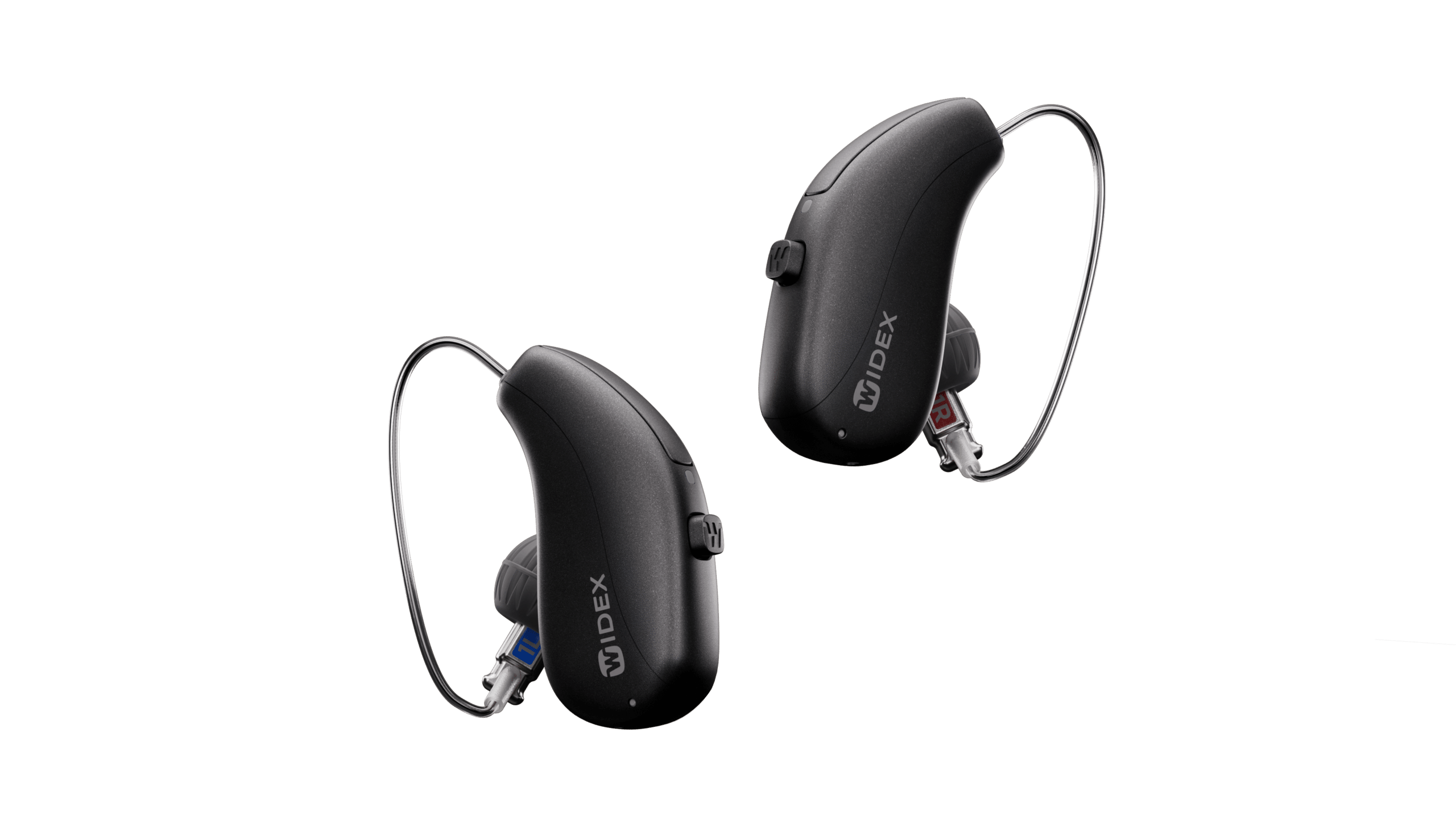
When a user enters a more complex listening environment, they can activate the Clarity Boost program. This function engages a dedicated AI co-processor that uses an audio-specific neural network designed to preserve sound quality.
According to the company, this system delivers up to a 6 dB higher output signal-to-noise ratio (SNR) compared to competitor AI-based products. Clinical data from the company shows that 95% of people wearing hearing aids from the Alllure platrom (before the allure AI RIC) report improved speech in noise and 97% describe the sound as natural and clear.
The Allure AI RIC reportedly provides up to 32 hours of use, including 6 hours of AI use or streaming. It features mFi, ASHA, and LE Audio connectivity, as well as telecoil functionality and hands-free communication. Charging options include standard, Charge & Clean, and portable Qi-enabled solutions. The Widex Allure AI RIC will be available in five markets on June 1st, followed by a full-scale launch in remaining markets, including the US, on November 1, 2026.
Compass Cloud 2.0
An evolution of the industry’s first cloud-based fitting software, which the company introduced in March 2025, Widex Compass Cloud 2.0 features new tools developed in partnership with HCPs. The update builds on a refined fitting rationale informed by data from thousands of real fittings and personalization tools aimed at improving first-fit acceptance.
According to WSA Vice President for Digital Customer Workflow Karin Hours, the driving principle behind the development of Widex Compass Cloud 2.0 was creating better workflow for fittings, so HCPs can spend more time seeing patients.
In her experience, HCPs match one of two hearing aid fitting archetypes: the pragmatist and the artisan. The pragmatist is generally a newer HCP who appreciates the guidance that fitting software provides and is OK with a fast fit. The artisan is an experienced HCP who can and wants to customize a fitting.
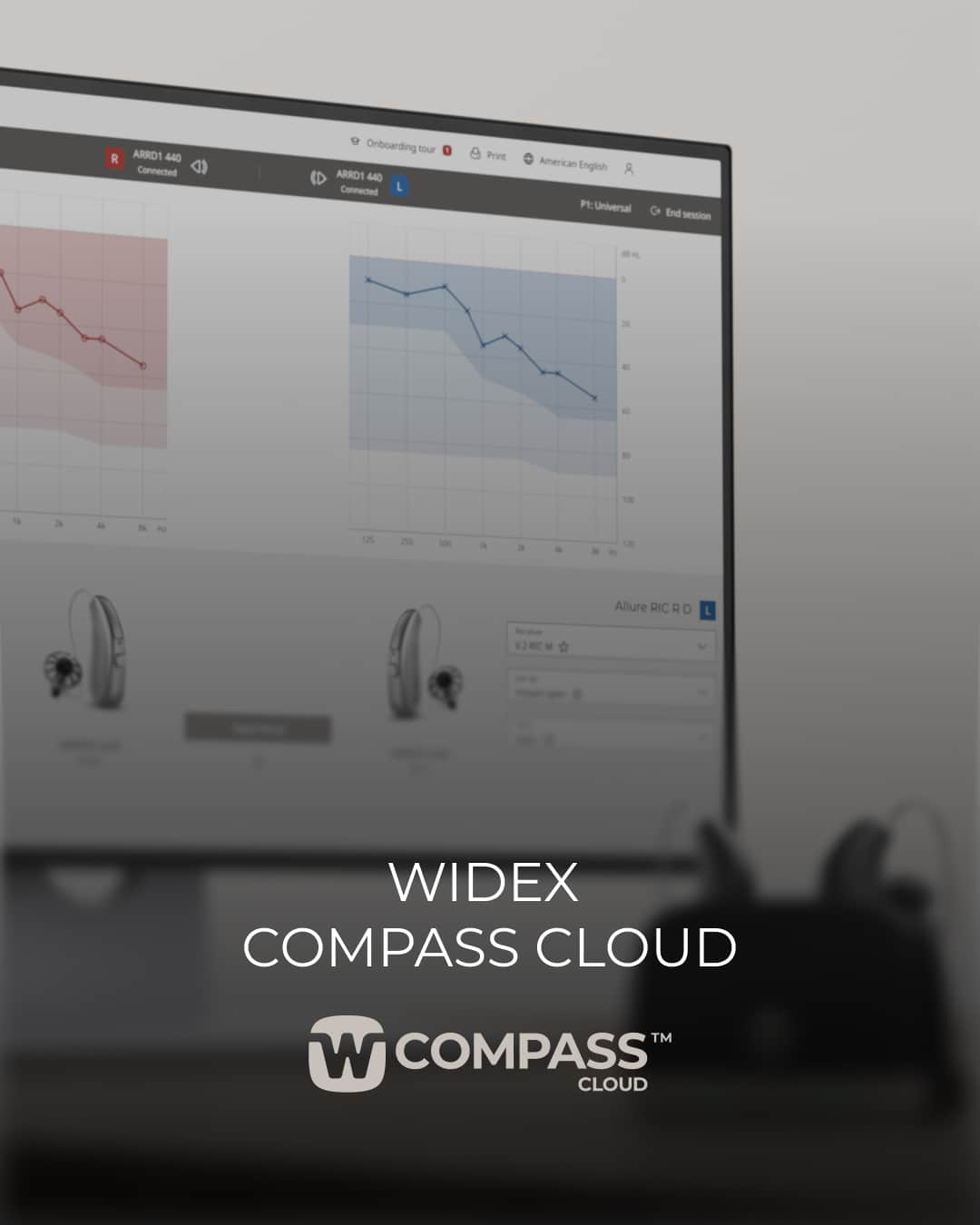
While Widex Compass Cloud 2.0 can still be used in a more streamlined way by “pragmatists,” this improved software brings back many of the features that the more streamlined original Cloud Compass didn’t have for customizing fittings and adds even more than ever before.
Updates to the platform include an improved Adaptation Manager for patient onboarding, SmartSpeak for spoken status updates, expanded Data Logging and Sound Class Adjustments for more precise fine-tuning, and a Transfer Settings feature to simplify configuration. According to Widex, Compass Cloud has over 99.9% uptime and an HCP satisfaction rating of 4 out of 5.
“Compass Cloud 2.0, together with Allure AI RIC, expands what’s possible in hearing care by connecting a cloud-based fitting approach with a device designed around natural sound and on-demand AI support,” says Amobi. “It enables HCPs to deliver efficient, accurate first fits and refine them over time with greater precision, while helping their patients experience natural sound for everyday listening with targeted clarity in noise when it’s needed.”
For more information on WIDEX Allure AI RIC, click here. For more information on Widex Compass Cloud 2.0, click here.