The WSA Sound Preference program aims to reframe hearing aid counseling to include identifying individual sound preferences and thereby enable more personalized fittings, improved patient engagement, and better hearing aid satisfaction, and increase adoption.
By Melanie Hamilton-Basich
Hearing is very personal. No two people are exactly alike, even if their audiograms may appear identical. Knowing this is one thing, but being able to pinpoint what differences might help a particular person find a hearing device that meets not just their needs but also their individual preferences is another. Which is why resources to help identify personal sound preferences seem like a great addition to an HCP’s toolbox.
The new WSA Sound Preference program, which was announced and made available Apr. 20, acknowledges that not everyone experiences hearing technology in the same way, and leans into identifying and exploring personal preferences to help hearing care professionals and patients navigate the hearing care journey with a different mindset.
“Every patient hears the world differently, and hearing care professionals understand that successful fittings require more than matching a device to an audiogram,” says Lise Henningsen, head of audiology research and communication at WSA. “WSA Sound Preference provides research, language, and specialized tools that help hearing care professionals explore this dimension of hearing more directly with their patients for better hearing aid adoption and satisfaction.”
Two Different Approaches to Hearing Technology and Sound
There are two distinct approaches to audio and hearing aid design: natural sound and enhanced sound. Natural sound is focused on sounding more like unaided hearing, keeping the balance between speech and what may be considered background sounds in the surrounding environment, while enhanced sound uses technology to enhance speech and diminish background sounds, resulting in more of a contrast.
According to WSA, “New research conducted by WSA shows that up to 40% of listeners demonstrate a strong and consistent preference for one sound design over another.” That’s 20% on one end with a strong preference for “natural sound” and 20% on the other end with a strong preference for “enhanced sound,” with 60% in the middle who have some or no preference for either sound design.
This means that for the up to 40% who have a strong preference, once their preference is identified they can quickly narrow down their options to either natural sound or enhanced sound.
This means that for the up to 40% who have a strong preference, once their preference is identified they can quickly narrow down their options to either natural sound or enhanced sound. That can give HCPs a jumpstart on finding the best hearing device match for a person, and improving satisfaction.
Based on the research and her personal experience, Henningsen hypothesizes that being able to prescribe a hearing aid that matches a person’s identified sound preference could help them acclimatize to using and wearing hearing aids more quickly. Which would be helpful for HCPs and patients.
Clinical Tools and Resources for All
To make the most of all this information, the Sound Preference program provides clinical tools and resources to incorporate it into clinical workflow and make it an integral part of patient consultation and fitting. This includes access to research materials about sound preference and hearing outcomes, which will grow under the guidance of a new independent scientific advisory board. And all of this is freely available to all hearing care professionals, regardless of whether they prescribe WSA hearing aids.
Sound Preference Tool
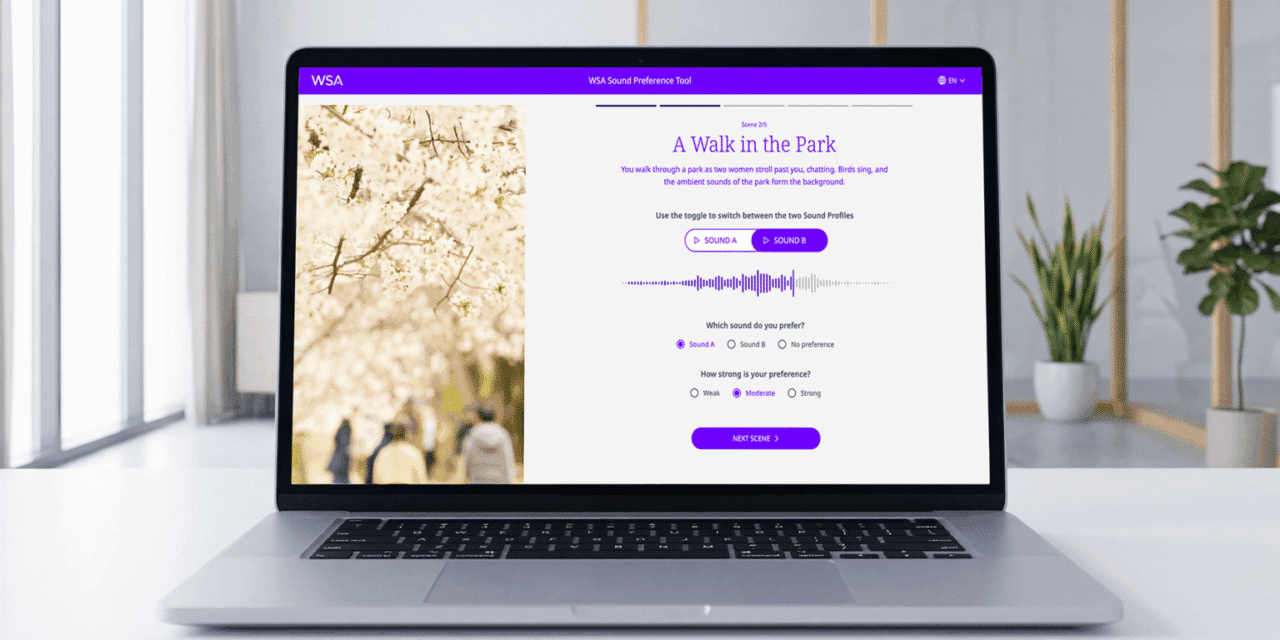
One of these tools, the Sound Preference Tool, is a sound comparison experience I was able to demo that allows users to determine their sound preference based on what they hear.
Whether someone can hear a sound is different than how they hear a sound, and how they want to hear sound. And hearing preferences can be extremely difficult to articulate. How many times has a patient come into an HCP’s office with the same vague complaint about their hearing aid, saying something along the lines of, “It doesn’t sound good”?
This new tool allows the user to sit at a computer with headphones and simply choose which sound sample they prefer, no descriptions needed. It’s randomized, so it takes bias out of the equation, which helps as well.
The language used for the tool’s on-screen instructions was specifically chosen to empower people and focus on positives to put them in an open frame of mind. For now, the sound is set to N-3 across the board, not compensating for individual hearing loss. The samples were created using the different sound philosophies, but are not specific to any hearing aid.
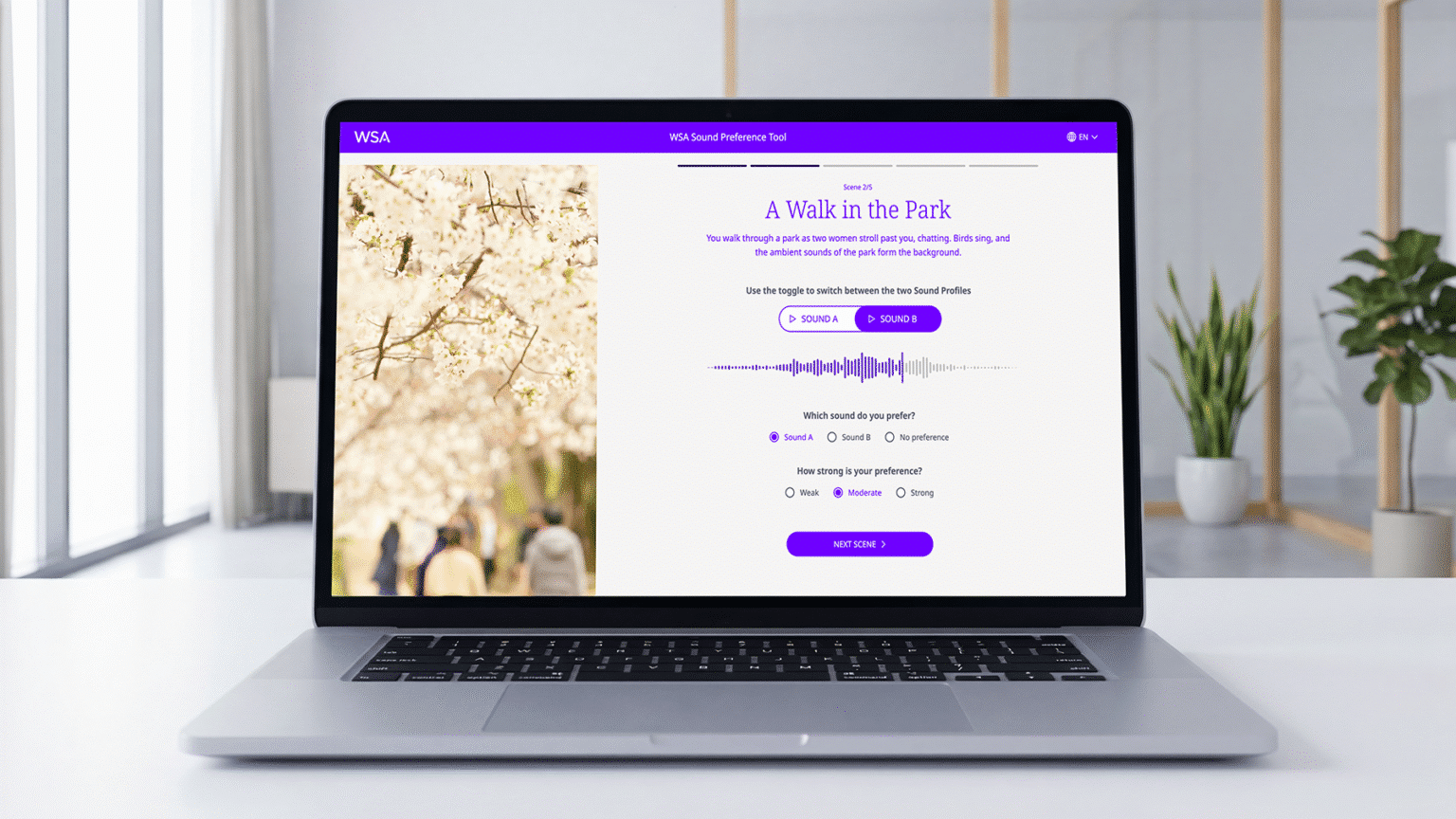
The demonstration provides samples of “enhanced sound” vs. “natural sound” in different situations, such as cooking in the kitchen and walking through a park hearing both bird song and people talking. For each situation, users are directed to select which sound sample they prefer (A or B), and the strength of their preference. The assignment of natural sound or enhanced sound to A vs. B is completely randomized, so true sound preferences come through.
There are four possible results: clear preference for natural sound, clear preference for enhanced sound, clear preference in specific situations, and no clear preference. The results tell both the patient and the HCP how the patient prefers to hear sounds in different situations. Based on the results, they can discuss what hearing aids might be best for them.
For people who show no strong sound preference, their hearing aid options are broader, Henningsen notes, which can be a good thing. They won’t object to either type of sound experience, so hearing aids from both sound philosophies will meet their needs and preferences.
According to Henningsen, one key benefit of the Sound Preference program, and this tool in particular, is that it gives autonomy back to the end user, the patient.
When it comes to selecting and fitting a hearing aid, “There is more to it than making sure the parameters are set the right way,” she notes. Acknowledging a patient’s individual preferences and relying on them to inform care gives them power and allows them to feel in control of their own hearing care path. This can provide a starting point.
A user’s results from the Sound Preference experience tool reveal “not an ultimate truth, but a piece of the puzzle for the audiologist to work with in determining what directions to go toward to meet the patient’s preference,” Henningsen says.
This approach makes the patient an integral part of the decision process, and will likely make them more inclined to commit to a solution because of a feeling of ownership.
But the real benefit to the Sound Preference program, as I see it, is creating more of an open dialog between HCPs and patients that could lead to better care overall.
I look forward to seeing who uses these resources and how they end up helping HCPs and their patients.
Featured image: Sound Preference Tool shown on computer monitor. Photo: WSA