
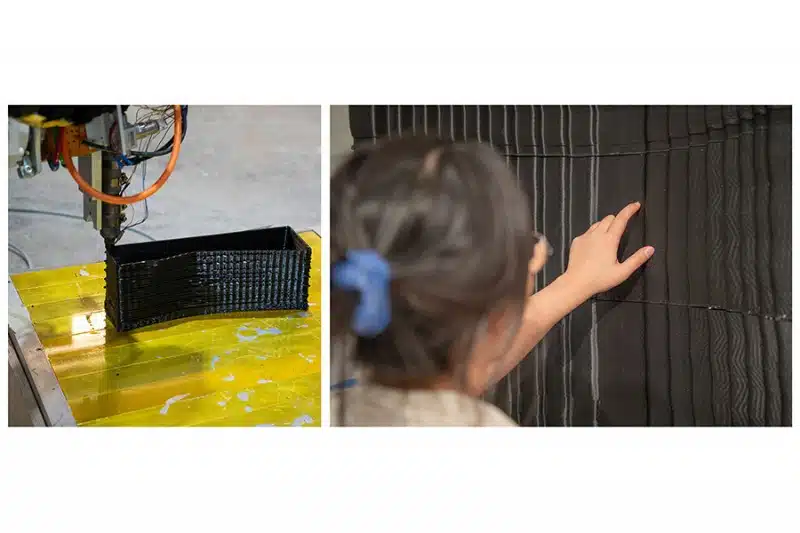
A University of Michigan researcher has developed 3D-printed acoustic tiles that can be customized to control sound reflection and enhance communication.
A researcher has developed a modular wall system using 3D-printed tiles designed to improve speech clarity for deaf and hard-of-hearing individuals by controlling how sound travels in a room. The designs were presented by Po-Chun Chou, a researcher from the University of Michigan, at the 190th Meeting of the Acoustical Society of America.
The research addresses the challenge that for many with hearing loss, speech clarity—not simply volume—is a primary obstacle in enclosed spaces where sound reflecting off walls can muddle conversation.
“For most people, this might just feel like background noise,” says Chou. “But for deaf and hard-of-hearing individuals, it can significantly affect their ability to follow conversations—especially when it comes to distinguishing important speech details like consonants.”
To manage sound behavior, Chou’s team used acoustic simulations to study how different surface textures influence speech clarity. Based on these findings, they designed modular tiles that can be linked together to fit various room sizes and shapes. The components are fabricated using a 3D printer.
“One key finding is that the acoustic performance of a wall can be precisely controlled through geometry and fabrication parameters—not just traditional materials,” Chou says.
The team also found that different patterns and 3D printing settings impact different frequency ranges, which means the wall designs can be personalized for specific user experiences and acoustic needs. The project highlights the role of environmental design in accessibility.
“Architectural acoustics should not be seen only as a matter of comfort—it can also be a matter of accessibility,” Chou says. “By integrating design, digital fabrication, and acoustic performance, we can create spaces that support clearer communication. This benefits not only deaf and hard-of-hearing users, but everyone who uses the space.”
Featured image: The modular wall to improve speech clarity is put together using building blocks fabricated by 3D printing. Photo: Po-Chun Chou


That’s a really interesting approach – it makes sense that tailoring the sound environment could make a big difference for people with hearing difficulties.