Samsung Electronics has received FDA clearance for a hearing aid feature built directly into compatible Galaxy Buds for Android users, following Apple’s model.
Samsung Electronics announced on Aug 11, 2026, that its Galaxy Buds Hearing Aid feature has received US Food and Drug Administration (FDA) clearance, enabling compatible Galaxy Buds to function as an over-the-counter (OTC) hearing aid for users 18 years and older with perceived mild to moderate hearing loss—without a prescription or clinic visit.
The feature joins a broadening segment of consumer devices pursuing FDA authorization for OTC hearing aid software, following moves by other technology companies, including Apple, which unveiled hearing aid capabilities for its AirPods Pro in a similar OTC format. An analysis of what it means when earbuds are classified as hearing aids has been explored previously by The Hearing Review.
Integrated Hearing Test and Personalized Amplification
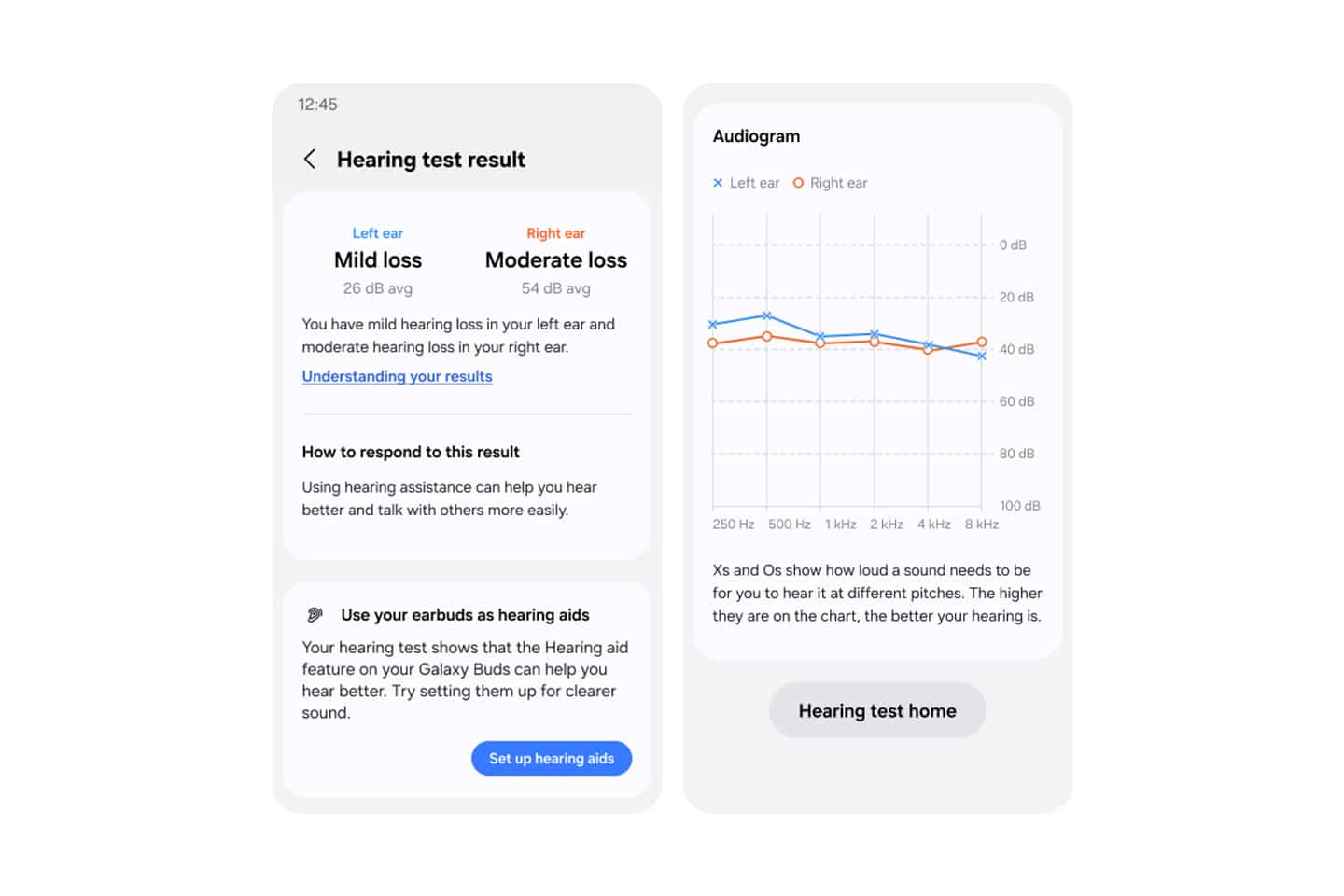
The Galaxy Buds hearing health experience centers on two features integrated directly into the buds without requiring a separate app. Users navigate to the Galaxy Buds menu in device Settings to access a self-administered Hearing Test that takes approximately five minutes to complete. Using clinical-grade, pure-tone audiometry, the software tests each ear individually and generates an audiogram, with Samsung stating the accuracy is comparable to a professional audiologist’s evaluation. Results categorize hearing as normal or classify it into one of four stages of hearing loss: mild, moderate, severe, or profound.
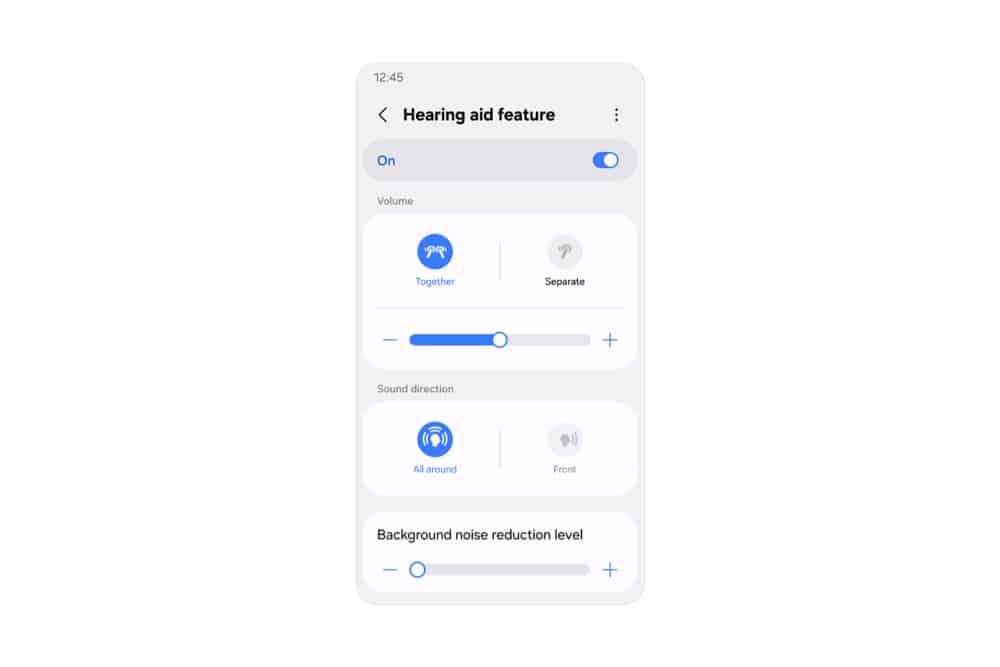
The Hearing Test is registered as a software as a medical device (SaMD). Based on test results, the Hearing Aid feature amplifies sounds the user has difficulty hearing—such as high frequencies, surrounding whispers, and distant voices—personalized to each individual’s hearing profile.
The device uses NAL-NL2, which, while now not the newest, has long been used as the clinical standard formula for fitting prescription hearing aids, to deliver personalized amplification targets. Additional features include noise elimination and beamforming, which help focus sounds in front of the user while suppressing background noise—capabilities typically found in premium hearing aids. Hearing-related insights, including noise exposure levels and Hearing Test results, are also accessible within the Samsung Health app.
“Hearing health is a vital component of our overall well-being, profoundly impacting how we communicate, connect with loved ones and engage with the world,” says Hon Pak, senior vice president and head of the digital health team for the Mobile eXperience (MX) Business at Samsung Electronics, in a release. “With the latest clearance from the FDA, we are expanding access to hearing support and making proactive care effortless by integrating the Hearing Test and Hearing Aid functionality directly into the Galaxy Buds.”
Clinical Development and Validation
Samsung’s path to FDA clearance builds on nearly six years of hearing technology development. In 2020, the company introduced a Personal Sound Amplification Product (PSAP) feature on Galaxy Buds+, and a clinical study of Samsung earbuds as a hearing enhancement device was subsequently published in The Hearing Review. That PSAP feature was clinically validated in 2021 as effective support for daily communication for those with hearing loss.
To develop the OTC hearing aid feature, Samsung collaborated with the National Acoustic Laboratories (NAL) and Samsung Medical Center (SMC). Clinical validation studies were conducted at Vanderbilt University Medical Center, San Jose State University, and the University of Memphis.
Market Context
The announcement arrives amid growing attention to the OTC hearing aid market and broader MarkeTrak data showing shifting consumer patterns in the age of OTCs and wearables. According to the World Health Organization (WHO), more than 1.5 billion people globally experience some degree of hearing loss—a figure projected to reach 2.5 billion by 2050. Samsung notes that many who could benefit from hearing aids do not use them due to cost, social stigma, or limited access to professional care.
Samsung has not yet announced pricing or a specific availability date for the hearing aid feature rollout, but has targeted Q4 2026 for availability in the United States.