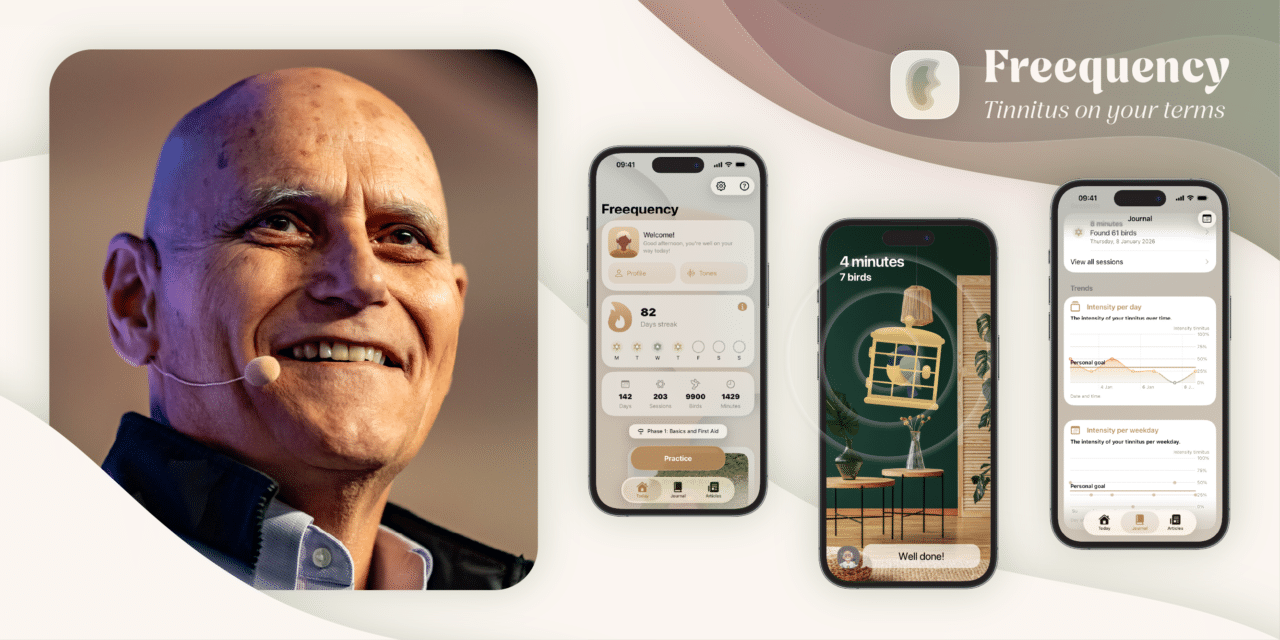
European-developed Freequency, backed by key psychology experts, launches US pilot program at AAA 2026.
A digital tinnitus application developed in Europe, Freequency, is entering the US market with a pilot program beginning April 22. The application is notable for its use of behavioral and acceptance-based therapeutic principles and for the addition of modern clinical psychology figure Steven C Hayes, PhD, and tinnitus CBT researcher Gerhard Andersson, PhD, to its clinical advisory board.
Unlike many existing solutions that focus on sound masking, Freequency applies principles from exposure-based therapy, cognitive behavioral therapy (CBT), and Acceptance and Commitment Therapy (ACT) through short, daily sessions on a mobile device. Using augmented reality and spatial audio, the app guides users to actively engage with their tinnitus rather than avoiding or suppressing it.
“Exposure allows people to respond more flexibly to tinnitus,” says Hayes, in a release. “The aim is not to remove the sound, but to change the relationship to it.”
Developed in the Netherlands, the application has been adopted by tens of thousands of users, with early real-world data indicating measurable reductions in tinnitus-related distress over time, according to the company. The developers position the intervention as a complement to existing clinical care, designed to work with healthcare providers to extend care beyond the clinic and support earlier intervention.
The application was introduced in the US via a pilot starting April 22, coinciding with the American Academy of Audiology’s annual convention (AAA 2026) in San Antonio. According to the developers, the pilot will evaluate how the approach translates to the US context, focusing on usability and patient engagement.
The advisory board also includes Jan de Laat, PhD, a clinical physicist–audiologist, to provide expertise from the audiological domain.
Featured image: Freequency