Med-El Survey: Fewer Than 3 in 10 Americans Believe Society Knows Enough About Hearing Loss
A new Med-El survey of more than 1,000 US adults finds that nearly half believe public awareness of hearing loss is lacking.

A new Med-El survey of more than 1,000 US adults finds that nearly half believe public awareness of hearing loss is lacking.
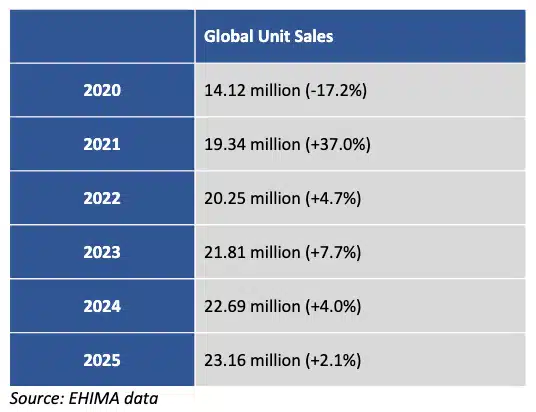
The 2.1% year-over-year increase points to continued demand for professionally fitted hearing instruments.


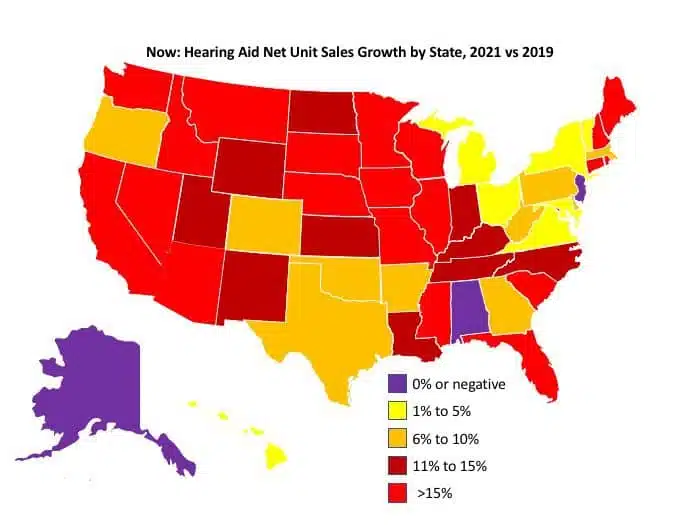
The US hearing aid market rebounded from a net unit loss of -18% in 2020, which was induced by the pandemic, to a unit increase of 37% in 2021—essentially making what would appear to be a full recovery. In fact, hearing aid sales in 2021 ended up an impressive 12% above pre-pandemic 2019 levels. Pent-up demand is likely to keep fueling hearing aid growth numbers in 2022 for both the private/commercial market and especially the VA.


According to statistics generated by the Hearing Industries Association (HIA), US hearing aid net unit sales decreased by 58.6% in the second quarter of 2020 due to the negative effects of the Covid-19 pandemic and mass shutdowns during March through May.
Read More
Fifty-two percent of Spanish people with hearing loss do not use hearing aids for fear of social rejection. The fact is that the stigma around using hearing aids continues to be the main barrier in Spain today to people with hearing loss not wanting to adapt.
Read More
Hearing healthcare practices made good progress toward recovery in May and look to do significantly better in June, according to results from The Hearing Review’s third survey that looks at the impact of the coronavirus on our field.
Read More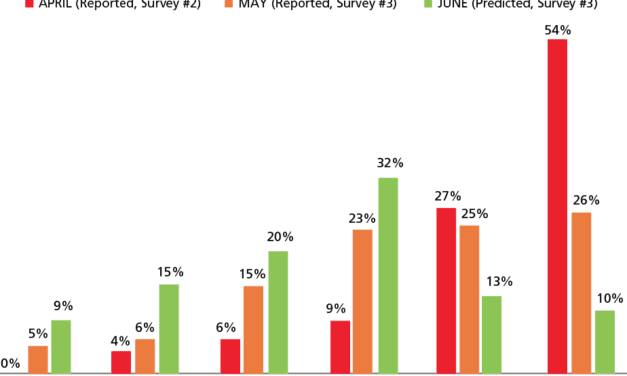
April is the cruelest month, according to T.S. Eliot. This certainly proved true for the hearing healthcare field in 2020.
Read More
The British Society of Hearing Aid Audiologists (BSHAA) has published results from an April survey of its UK members about how they were responding to the Covid-19 pandemic. The survey has several interesting parallels to a Hearing Review survey of US hearing care practices during the same period in mid-April.
Read MoreUS hearing aid unit sales dropped off the table after the first week of March. However, even with the “Great Lockdown,” first-quarter US hearing aid unit sales still came in about 1% above the same period last year, according to HIA statistics.
Read More
A survey on how audiologists and hearing aid specialists are coping with the Covid-19 pandemic in their practices during April-May 2020.
Read More
In response to the Covid-19 pandemic, The Hearing Review surveyed hearing care professionals during the past week regarding how the outbreak is impacting their business. Here are the results.
Read More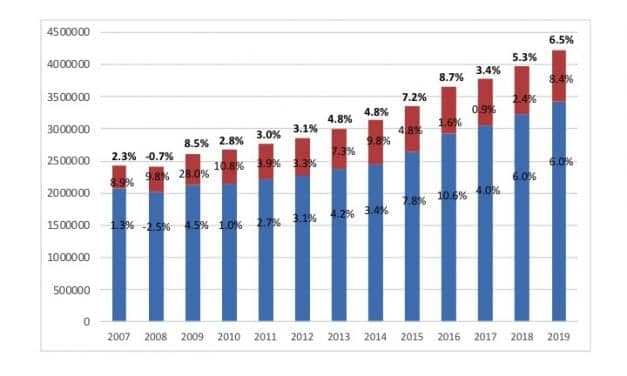
Hearing aid unit sales in the United States during 2019 increased by 6.5%—and officially broke the 4 million-unit mark for the first time, according to statistics generated by the Hearing Industries Association.
Read More
According to statistics generated by the Hearing Industries Association (HIA), Washington, DC, overall hearing aid unit sales through the first three quarters of 2019 have increased by 4.9%, with a 4.2% increase in the commercial sector and a 7.9% increase in the VA.
Read More
However, private sales in the UK continued their strong performance with hearing instrument sales up 4.4% on Q1, from 82,573 to 86,250 units sold.
Read More
Of the 1,615 respondents who reported how they were paid, more than 4 in 5 (81%) respondents were employed as clinical service providers whose salaries ranged from $79,095 for providers to $104,293 for administrators, supervisors, and directors. Private practice owners had an annual median salary of $84,000, according to the report.
Read More
The study results, which the The International Campaign for Better Hearing announced in a press release, conclude that 74% of respondents from around the world with hearing loss have at some point been embarrassed, while 69% have felt anxious, 64% have experienced feeling socially isolated, 59% felt tired/drained, 62% suffered from anger or frustration, and 49% have even felt unsafe as a result of their hearing loss.
Read More
The survey findings illustrate the significance of hearing on families and life events: 64% of respondents said that hearing “I love you” from a partner or family member would not be the same if they couldn’t hear; this was the most mentioned life event, according to MED-EL’s survey.
Read More
Hearing aid net unit sales in the United States increased by 2.5% during the first quarter (Q1) of 2019, totaling 1,000,653 units—the second time unit volume has ever exceeded 1 million in a quarter.
Read More