Turn-Taking AI Lets Smart Headphones Focus on the Voices That Matter
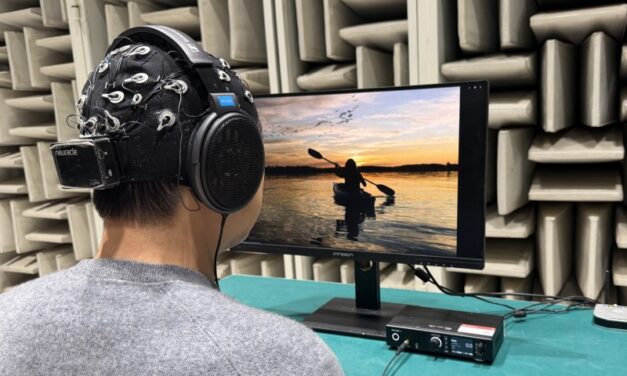
The system’s developers think the technology could one day help users of hearing aids to filter their soundscapes without the need to manually direct the AI’s “attention.”
A University of Oklahoma researcher is studying how children with cochlear implants use sensory feedback from their mouths and tongues to develop speech, exploring whether enhancing oral motor training could improve language outcomes.
Lineage Cell Therapeutics has entered into a $12 million research collaboration to advance its auditory neuronal cell transplant, ReSonance.
Twangy voices, often described as “brassy” and “bright,” can be used to get a message across in a noisy environment.
Read MoreThis discussion addresses the misunderstandings around the connection between cognition and hearing loss and the best ways for HCPs to approach the topic with patients.
Read MoreResearchers have restored hearing in mice with ENPP1 deficiency using a novel bone-targeted enzyme replacement therapy, offering hope for treating hearing loss in patients with this rare and often fatal genetic disorder.
Read MoreA large-scale European study by the University of Geneva reveals that hearing loss significantly accelerates memory decline in older adults—especially among those experiencing loneliness—highlighting the urgent need for early hearing care and social support.
Read MoreResearchers have discovered that two distinct genes independently regulate the regeneration of sensory hair cells in zebrafish, offering new insights that could inform future treatments for hearing loss in humans.
Read MoreSensorion’s Phase 1/2 Audiogene trial of the gene therapy SENS-501 for infants and toddlers with OTOF-related congenital deafness shows promising early safety and hearing improvement data, particularly in one patient, with a higher dose cohort now underway.
Read MoreThe USC study is the first to link hearing aids and cochlear implants to improved social lives among adults with hearing loss.
Read MoreIn a new study, gene therapy targeting the OTOF gene significantly restored hearing in children and adults with congenital deafness, with rapid improvement and no serious side effects.
Read MoreInspired by the silent flight of owls, researchers have developed an aerogel that effectively absorbs both high- and low-frequency noise, offering a new solution to combat noise pollution in vehicles and industrial settings.
Read MoreThis research is among the few to address hearing issues in long COVID and to include active treatment, with plans to expand using brain imaging.
Read MoreThe drug LGK974, which inhibits the Wnt signaling pathway, shows promise in reversing excessive bone growth in sclerosteosis.
Read MoreFAU researchers developed a novel AI-powered platform that uses real-time video analysis and deep learning to diagnose nystagmus remotely.
Read MoreThe University of Oldenburg’s Hearing4all research initiative has secured major federal funding as a Cluster of Excellence in Germany, enabling seven more years of pioneering work in hearing loss diagnosis, treatment, and technology development.
Read MoreA new review highlights the underrecognized potential of vaccines to prevent childhood hearing loss, especially in low- and middle-income countries.
Read MoreA new study finds that providing hearing aids and personalized audiology support helps older adults maintain more diverse and meaningful social connections.
Read More