Israeli and US researchers have identified a biological mechanism that prompts supporting cells in the inner ear to regenerate into sensory hair cells — a finding that could point toward new treatments for permanent hearing loss.
Israeli and US researchers have identified a key biological mechanism that may enable the regeneration of sensory hair cells in the inner ear, according to a statement from Tel Aviv University released Monday.
The study, published in Science Advances, centers on supporting cells located adjacent to the cochlea’s sensory hair cells. Hearing loss is frequently caused by damage to these hair cells, which detect sound and convert it into electrical signals transmitted to the brain. Unlike many other species, mammals — including humans — cannot naturally regenerate these cells once they are lost, making the damage permanent.
Using live tissue imaging and single-cell analysis, the research team examined whether supporting cells could be induced to replace damaged hair cells by blocking the Notch signaling pathway, a key cell communication system. The intervention prompted a subset of supporting cells to convert into hair cells, suggesting these cells may retain a latent regenerative capacity under the right conditions.
The researchers say the findings may help lead to new treatments aimed at restoring hearing.
The work adds to a growing body of research exploring hair cell regeneration as a potential avenue for treating sensorineural hearing loss. Previous studies have examined related approaches, including gene regulators tied to hearing regeneration and hair cell regrowth mechanisms in other species, though clinical applications in humans remain an area of active investigation.
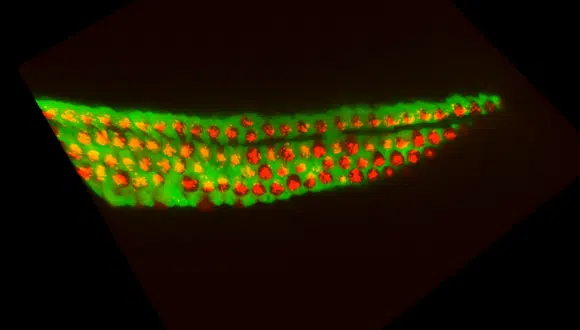
Featured image: Live imaging of the cochlear sensory epithelium. Supporting cells are shown in green and hair cells in red. Photo: Tel Aviv University