What to Tell Audio Engineers About Equalizations for Their Hearing Loss
For audio engineers and musicians who have high-frequency hearing loss, it's not enough to simply boost frequencies to match their audiogram.


For audio engineers and musicians who have high-frequency hearing loss, it's not enough to simply boost frequencies to match their audiogram.

These evidence-based clinical recommendations emphasizing holistic care provide actionable ways for hearing care professionals to address the complex relationship between hearing and cognition in their practices.







The study found that while clinicians focused on the stigma of hearing aids, patients were more concerned about the stigma of hearing loss itself.





Phonak U brought together over 53 students and professionals from 36 different university programs and featured an event from Second City.
Read More
In this interview, Jennifer Deal, PhD, shares her insights into the ACHIEVE study results that were recently released and what they mean for audiologists.
Read More
Helen Keller Services unveiled an online course to help older adults adapt to combined hearing and vision loss with the help of technology.
Read More
Signia and the Dallas Cowboys will partner to raise awareness of hearing health, educating communities on the importance of healthy hearing.
Read More
After hearing aids improve their lives, a couple grieves for the time they lost to poor communication in their marriage.
Read More
How dispensing audiologists can develop an organic communication strategy aimed at decreasing the negative emotions that accompany hearing loss.
Read More
Hearing Review publisher and president Roy Felts, talks about why age-related stigma kept him from accepting hearing aids.
Read More
Patient Care | September 2022 Hearing Review Giving voice to the unspoken pain...
Read More
Resources for quiet spaces.
Read More
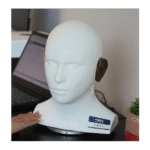
Based on more than four years of user feedback and requests, the new Audio CARL and CARL platform help “expand the use cases and value in which the CARL manikins can provide to hands-on education, research, and development of hearing technologies, and the provision of hearing aids in hearing clinics, all while fitting in better with clinical workflows,” according to the company’s announcement.
Read More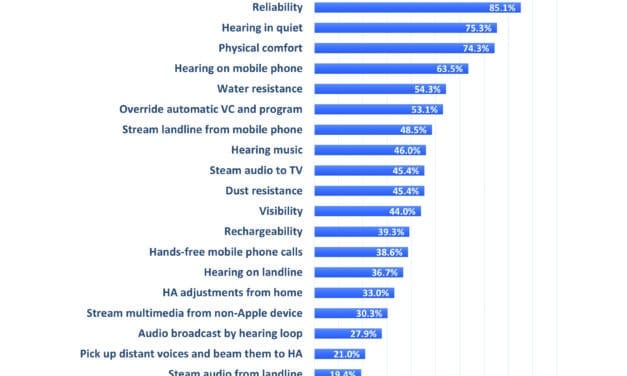
What are the major drivers of customer satisfaction with hearing aids? Almost all surveys emphasize the importance of hearing speech in noise. Recent consumer surveys also indicate that the main drivers of hearing aid satisfaction are sound quality or hearing aid performance over their satisfaction with the hearing care professional (HCP) or hearing aid physical qualities. Listening situations most important to hearing aid users for speech understanding are: 1:1 conversations and group conversations in noise, soft speech in quiet, understanding speech without visual cues, and speech at a distance.
Read More
It takes two to tango. A lot has changed during 40 years of hearing aid evolution. However, the role of the hearing care professional—as interpreter, counselor, and hearing aid fitter—has remained a vital part of the process while evolving to encompass new technologies, from smartphones to teleaudiology.
Read More
The text is divided into four clear sections to cover everything from the physics of sound to the anatomy and physiology of the auditory pathway and beyond.
Read More
As patient-centric care gains steam in both general medicine and hearing health—while being juxtaposed by new OTC and DIY hearing solutions—a renewed focus on follow-up services is crucial. This special report looks at follow-up AR protocols and perspectives, and includes perspectives from Nancy Tye-Murray, Brian Taylor, Cherilee Rutherford, Ron Leavitt, Susanna Løve, Dave Blanchard, and more.
Read More
The free four-part course explains the key cognitive skills developed as children age, techniques for communicating with pediatric clients, and which Ida tools will make the communication more fun and effective. The material supports hearing care professionals in enabling children to contribute in ways that make them a meaningful part of their care.
Read More