Adult Hearing Loss
A sampling of some of the important research that generally did not make its way to hearing care professionals during 2006.
Read More
A sampling of some of the important research that generally did not make its way to hearing care professionals during 2006.
Read More“Bye-bye, bye-bye,” said one 3 and a half-year old child, born deaf but with a cochlear implant that partially restored hearing 9 months earlier. That’s the most complex speech the child uttered during a testing session that involved play with a toy train set.
Read More
The American Academy of Audiology, Reston, Va, presented the 2006 Academy Honors during an evening reception at the April AAA Convention in Minneapolis. The Acade
Read More
As hearing care experts and “hearing loss preventionists,” it is our responsibility to consider critically the level of risk and educate our patients and the public appropriately about the use of personal music players.
Read More
The UNT model is designed to provide students with knowledge about retaining their musicians’ ears for their careers and their quality of life. The National Association of Schools of Music (NASM) has reviewed the program and an outline is being prepared for national dissemination.
Read More
Studies show that musicians routinely face sound pressure levels (SPLs) in potentially hazardous ranges, extending up to 120-130 dBA only 3 feet from the speaker in amplified rock/pop bands, 83-112 dBA on stage in various orchestras, and 80-101 dBA on stage in jazz, blues, and country and western bands.
Read More
The emphasis was on Medicare reimbursement, direct access, and “the branding of audiology”at the Academy of Dispensing Audiologists annual convention.
Read MoreAre professional ethics in the “eyes of the beholder”? Yes, the consumers’ eye. A perspective on ethics in private practice and how philosophy must dictate practice.
Read More.gif.webp)
A clinical study of an automatic adaptive directional microphone system finds exceptional benefits are available relative to hearing in noise.
Read More.gif.webp)
A study by the House Ear Institute indicates that DPOAE suppression tuning is still not adult-like by 3 months of age. Term neonates and 3-month-olds have comparable DPOAE suppression results and adults are dissimilar from these two groups. This suggests continued maturation of cochlear function in humans during the post-natal months.
Read More
For decades, the correlation between price, benefit, and satisfaction with hearing aids has been sketchy at best—until now. This study shows that benefit clearly overwhelms price as the key determinant of customer satisfaction, and technology does make a difference. Also, a best practices protocol for the selection, fitting, and verification of hearing aids is proposed.
Read MoreHearing care professionals should have at least a basic understanding of migraine and its audiovestibular symptoms: vertigo, tinnitus, phonophobia, and even hearing loss present as symptoms in at least 30% of migraine patients. This article, the first of a three-part series, provides an overview
Read More
Boys Town National Research Hospital recently celebrated its 25th anniversary of being a leading research center in pediatric hearing care science. HR looks at current research being conducted at the facility, which includes work on OAEs and ABRs, pediatric amplification, psychoacoustics and neurobiology, and genetic research into syndromic and non-syndromic hearing loss.
Read MoreHR visits the Mayo Clinic and interviews the audiologists and physicians who make up one of the country’s best hearing care facilities and are leaders in clinically applied research.
Read More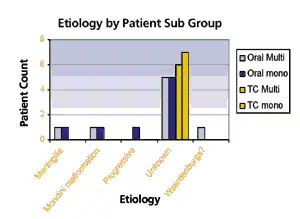
Research from the House Ear Institute suggests that oral bilingual youngsters who receive cochlear implants perform similarly on speech perception tasks and make equivalent gains in language compared to their monolingual peers
Read More