2006 ADA & IHS conventions
A sneak-peek at the products and services being unveiled at this year’s Academy of Dispensing Audiologists (ADA) Convention in Scottsdale, Ariz, and International Hearing Society (IHS) Convention in San Antonio.
Read More
A sneak-peek at the products and services being unveiled at this year’s Academy of Dispensing Audiologists (ADA) Convention in Scottsdale, Ariz, and International Hearing Society (IHS) Convention in San Antonio.
Read More
A brief update on Bluetooth terminology and developments, with special emphasis on those impacting hearing care.
Read MoreAmerica Hears, Bristol, Pa, and Dynamic Hearing, Richmond, Australia, a developer of software for the hearing aid and personal communications industries, introduces the Freedom AD, a hearing aid that will use the ultra-low-delay ADRO® (adaptive dynamic range optimization) technology.
Read More
Many dispensing professionals are surprised to see that clients with thresholds in the severe range can make excellent candidates for cochlear implants.
Read More
With the resurgence of BTE fittings, knowledge about how to select, create, and acoustically modify earmolds using horns, vents, and damping is more important than ever.
Read More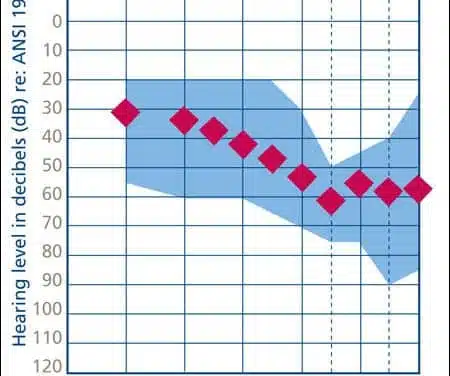
A comparison of a new-generation feedback cancellation algorithm with that of a recent-generation algorithm provides a look at how rapidly this technology is advancing.
Read MoreA new survey, carried out to mark the launch of a partnership between Specsavers Hearcare, Guernsey, United Kingdom, and Deafness Research UK, London, found that 14% of people spend up to 28 hours a week listening to their personal music player.
Read MoreDuring its annual shareholders meeting, Sonomax Hearing Healthcare Inc, Montreal, announced that it signed a development deal with Hear Atlast, Toronto, for the launch of hearing centers in large retail stores across Canada. The first hearing store is slated to open this fall.
Read MoreThe Alexander Graham Bell Association for the Deaf and Hard of Hearing (AG Bell), Washington, DC, has awarded $40,460 in arts and sciences awards to 54 students aged 6-19 who are deaf or hard of hearing and use spoken language to communicate.
Read More
A new visible speech system is designed to take much of the guesswork out of the fitting process. By moving from a subjective to an objective fitting approach and doing a better job of explaining the impact of hearing loss and hearing remediation, we have the potential to advance as counselors and encourage patients to take ownership of their hearing issues—and solutions.
Read MoreThe Starkey Hearing Foundation, a charitable organization known worldwide for its work of providing children in need with the tools to hear, is hosting its “So the World May Hear” Awards Gala on Saturday, June 17, 2006, in St. Paul, Minn.
Read More
Temporal processing concepts have gained greater importance as advanced digitally programmable compression hearing aids have come to dominate the industry. This article examines the key definitions and test procedures related to temporal processing and amplification.
Read More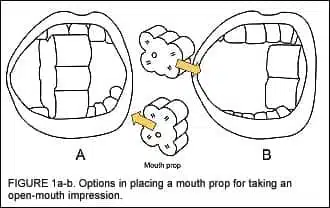
A series of articles on one of the most critical, and problematic, parts of the hearing aid fitting process. In Part 2, techniques for making the perfect impression.
Read More
In this section, HR presents a glimpse of the various products and services out on the market today.
Read More
A study on the feedback cancellation of six high-end digital hearing instruments
Read More