Why It’s a Good Idea to Stick Around Bass Players
Staying close to the bass player—or otherwise enhancing bass audibility—helps musicians and listeners, especially those with hearing loss, maintain pitch and better appreciate music.

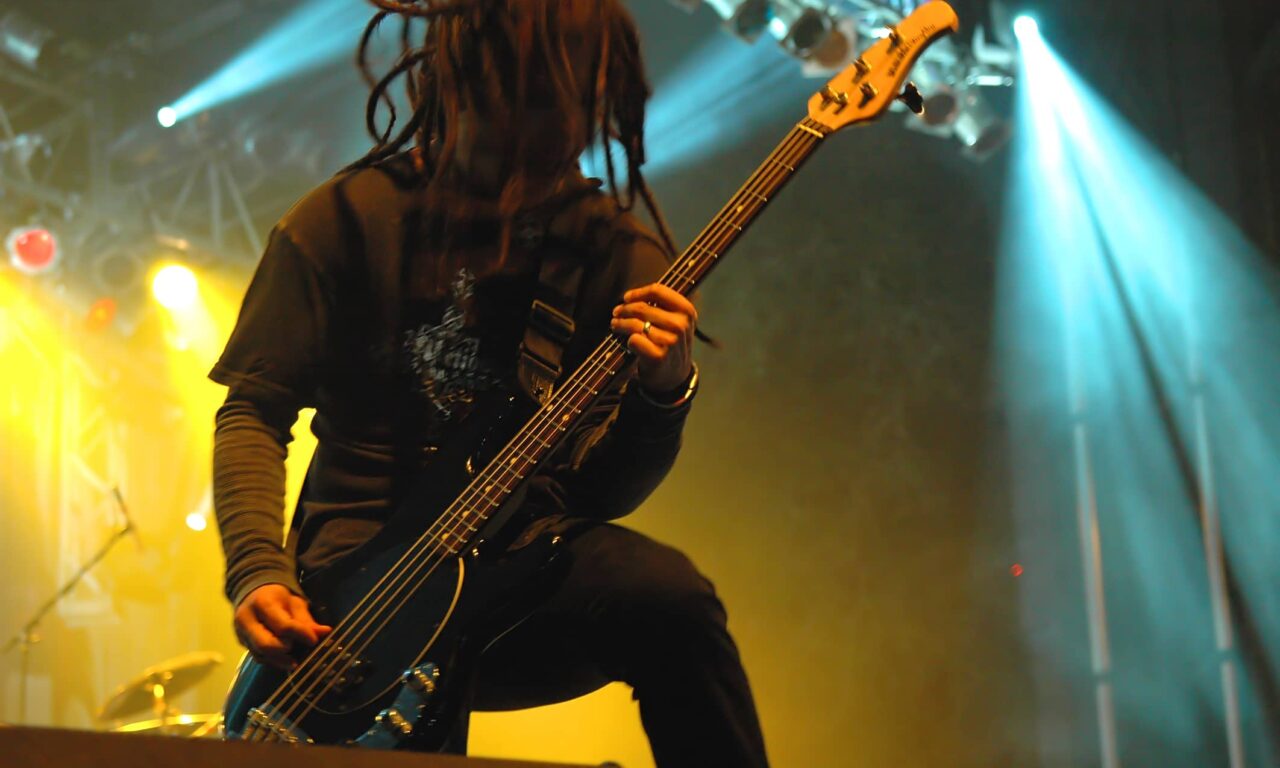
Staying close to the bass player—or otherwise enhancing bass audibility—helps musicians and listeners, especially those with hearing loss, maintain pitch and better appreciate music.

While many musical instruments are similar to the speech spectrum some, such as percussion instruments, can be quite different.





The input-related dynamic range of modern hearing aids is important to know in order to prevent distortion and input-clipping of louder sounds in the environment. Typical loud input sounds are music and the level of a hearing aid consumer’s own voice.



Marshall Chasin explains how earplugs are modified for long-eared or short-eared individuals who have ear canal resonances that are less, or more, than the usual 2700 Hz.
Read More
Like all healthcare fields where the clinician needs to explain complex concepts to the lay public, metaphors are used. In the optical field, “nearsighted” and “farsighted” are actually good metaphors despite their simplicity and academic inaccuracy. In the field of audiology, we have the description of the audiogram with the piano keyboard across the top; a good explanation, but limited in that it’s only the right hand side of the keyboard and musical notes are not pure-tones.
Read More
Audiologist Marshall Chasin posits a simple test that can be employed with a piano or keyboard that might quickly screen people for the possibility of a cochlear dead zone.
Read More
The Bernoulli effect is central to how we speak and it, at least in part, defines many of the characteristics of the speech spectrum input to hearing aids.
Read More
The Bernoulli effect is central to how we speak and it, at least in part, defines many of the characteristics of the speech spectrum input to hearing aids.
Read More
This may sound like a cheap romantic novel or a new soap opera but “area over love” is an important acoustic principle that rears its romantic head in a number of clinical scenarios that are encountered, almost every day.
Read More
Are we now at the point where audio files—whether they are MP3, WAV, or any other format—would come under suspicion of being altered and, therefore, not of any great forensic use? In his “Back to Basics” column, Marshall Chasin, AuD, explains why this may be so.
Read More
Recently there have been news reports about famous musicians who can no longer perform their music and have chosen to retire. “By hook or by crook, that should not happen,” says Marshall Chasin, AuD.
Read More
It is almost as if music has something in common with everything: psychology, physiology, acoustics, engineering, most areas of the arts, and now, the lowly spondee.
Read More
I receive many questions from instrumental musicians, vocalists, and performing artists about issues relating to how they should practice. A particularly common question is “How can I modify a room in my house so that my vocal practice doesn’t drive my dog crazy?”
Read More
It is conceivable that the modern digitization process reduces the extraneous hearing aid (microphone) noise too much and a clinical strategy would be to reprogram the hearing aid with minimal expansion implemented in the hearing aid software.
Read More
As the name suggests, temporary threshold shift (TTS) is a temporary loss in sensitivity to certain sounds following an exposure to a loud noise or music. Marshall Chasin, AuD, explains how our thinking about TTS has changed over the years.
Read More
The issue is that in perception we rarely need to hear the exact frequency (or frequency spectrum) of speech or of music. However, we do need to hear the relative differences in spectral cues.
Read More
Verification of a hearing aid (or hearing protection) fitting is an obvious usage, but it can be quite instructive about some general acoustic principles.
Read More
Since the beginning of my audiology career I have heard many of my hard-of-hearing patients comment that at around 3 PM they hit the wall and need a nap.
Read More