NIH Researchers Find DNA ‘Fingerprint’ Associated with Enlarged Vestibular Aqueduct
The variants lie near a known EVA-linked gene called SLC26A4, but their connection to EVA had evaded scientists until now.
Read More

The variants lie near a known EVA-linked gene called SLC26A4, but their connection to EVA had evaded scientists until now.
Read More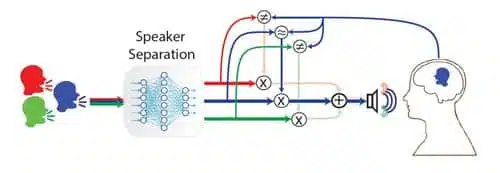
A cognitive hearing aid that constantly monitors the brain activity of the subject to determine whether the subject is conversing with a specific speaker in the environment would be a dream come true.
Read More
The Medicare Hearing Aid Coverage Act addresses one piece of the puzzle by improving access to hearing aids and related examinations.
Read More
In research published in “Nature Communications,” University of Michigan researchers report a new unexpected cause for this auditory neuropathy, a step toward the eventual work to identify treatments.
Read More
The Over the Counter Hearing Aid Act (HR 1652), which was bundled as part of the Medical Device User Fee Amendments (MDUFA) package and the FDA Reauthorization Act, was passed yesterday by the US House of Representatives as anticipated.
Read More
In a review article published July 10 in “The Lancet,” Wilson and colleagues highlight accessibility to screenings, treatments, and preventive measures as keys to stemming the rise of hearing loss not only in the United States, but across the world.
Read More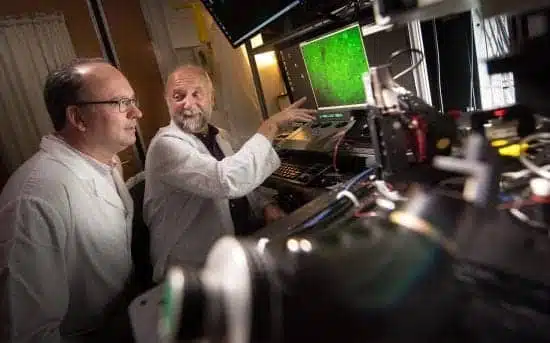
Researchers showed that limiting the supply or the function of the neuromodulator adenosine in a brain structure called the auditory thalamus preserved the ability of adult mice to learn from passive exposure to sound.
Read More
The findings were published June 29 in “Nature Communications.“ The study is reportedly the first to illuminate in detail how a particular protein, which is known as CIB2, allows hearing to work.
Read More
According to industry sources, the June 9 dissemination meeting of the National Academies of Sciences, Engineering, and Medicine (NASEM) is expected to include a “strawman” proposal that could serve as a starting point for discussions that lead to an OTC hearing aid category by the FDA.
Read More
“Whattage” represents the frequency with which a listener uses “What?”, cognate words, or behaviors that prompt repetitions by a communicatively significant other. The concept of “Whattage” has broad implications for marketing the value of hearing correction to the general public, as well as individual members of the communicative dyad.
Read More
Can a fish with a malformed jaw tell us something about hearing loss in mice and humans? The answer is yes, according to a new publication in ‘Scientific Reports.’
Read More
The Hearing Industries Association (HIA) has issued a position paper in response to what the organization sees as several inaccurate statements made at the recent April 18 FTC Workshop titled, “Now Hear This.”
Read More
The team wants to find out from people with tinnitus, healthcare practitioners involved in hearing, and other hearing researchers, which types of tinnitus complaints should be measured to assess whether a treatment is working.
Read More
Researchers at Brigham and Women’s Hospital found that use of postmenopausal hormone therapy was associated with higher risk of hearing loss, and the risk tended to increase with longer duration of use.
Read More
Larry Humes, PhD, and colleagues present a summary of findings from their recent study published in the March 2017 edition of the American Journal of Audiology that compares a professionally driven best-practice hearing aid service delivery model to a version of an over-the-counter (OTC) model. One important message that should not be lost in the extremely relevant findings of this RCT study is that hearing aids are, in fact, efficacious and provide considerable benefit to older adults with mild-to-moderate hearing loss.
Read More