
We need all hearing care professionals right now. The Department of Education’s plan to stop recognizing audiology as a professional program risks limiting the supply of future audiologists when we’re facing a workforce shortage.
By Melanie Hamilton-Basich
Audiologists are essential members of the healthcare workforce, but a recent federal policy shift seems to ignore this. The U.S. Department of Education’s proposal to narrow the federal definition of “professional” programs to exclude audiologists and restrict access to financial assistance for education in the profession threatens not only audiology education but also patient access to care nationwide. Audiologists are professionals by every meaningful standard, and public policy should reflect that reality.
Why the “Professional” Designation Matters
Professional degree status is not about a meaningless definition. For the Department of Education, it determines student eligibility for higher federal student loan caps and access to workforce development programs. This affects audiology education, recruitment, retention, and patient care.
Yes, hearing instrument specialists, audiology assistants, and otolaryngologists are important providers of hearing care who are more needed than ever in this field. This does not minimize what they do. They work in concert with audiologists to deliver vital services. But we need all hearing care professionals right now. And the Department of Education’s proposed removal of audiology from its recognized professional programs risks limiting the supply of future audiologists when we’re facing a workforce shortage.

Audiology Meets Every Test of a Profession
Audiologists are trained at the doctoral level, complete extensive supervised clinical education, pass national examinations, and maintain state licensure. They diagnose, manage, and treat complex disorders of hearing and balance that directly affect communication, cognition, fall risk, mental health, and overall quality of life. These are not extraneous services. They are essential to providing all patients with the care they need.
Impact on Access and Equity
Limiting access to financial aid and loan repayment programs will deter prospective audiology students—especially those from underrepresented backgrounds—and exacerbate shortages. The impact will be felt most acutely in rural and underserved communities, where audiologists already face barriers to recruitment and retention.
To make matters worse, while Congress has once again extended Medicare telehealth coverage for audiologists—this time through January 30, 2026—audiologists are still not granted permanent authority to provide telehealth services under Medicare. This is another instance of failing to acknowledge audiologists as essential healthcare professionals. For Medicare beneficiaries, telehealth is not a convenience; it is often the difference between receiving care and going without it. Audiologists need to be recognized appropriately by the federal government to provide effective care to patients.
The Path Forward
It’s important to note that the rulemaking process is not complete. The Department of Education has not yet published a proposed or final rule defining “professional student,” and has expressed that it “may make changes in response to public comments.”
An even more encouraging development is The Professional Student Degree Act (H.R. 6718), introduced in the U.S. House of Representatives in December. If this bill becomes law it will officially recognize audiology programs as professional degrees under the Higher Education Act.
This means there is still time for audiologists and others concerned about this issue to advocate for change by urging Congress to support The Professional Student Degree Act and by submitting public comments before the Department of Education issues a final rule. I urge you to take advantage of this opportunity.
— Melanie Hamilton-Basich
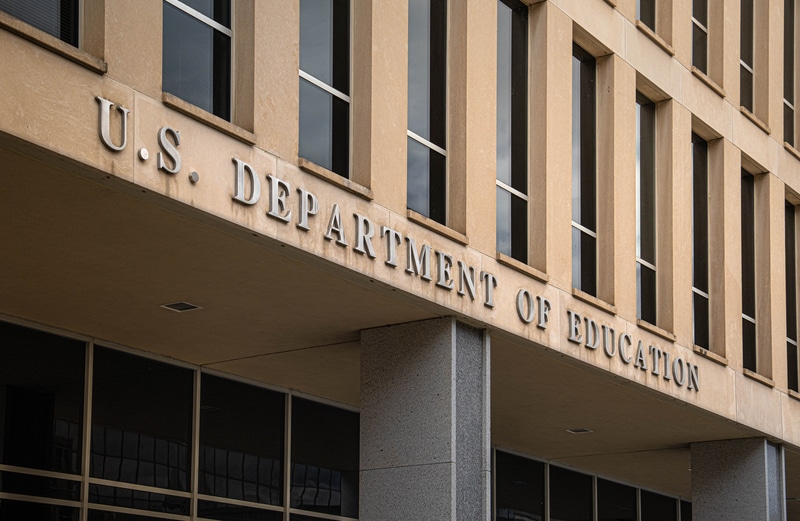
Featured image: U.S. Department of Education building in Washington D.C. Photo: ID 281424976 © Lucas Deaver | Dreamstime.com


The proposal to end professional designation extends to many workers, and specifically targets industries where women are in the majority–nurses and teachers, for instance. This is horribly wrong for the reasons you mention, and also because it’s a way of demeaning women and the work they do. I support your publishing the news, but please don’t make it sound like the administration is singling out audiologists.
I edit the Substack newsletter High Altitude Hearing and have referenced your research in the past.
Thanks,
Paula DeJohn