Early Supporting Cells May Combat Causes of Deafness
New research shows that harnessing the regenerative power of early supporting cells of the inner ear could lead to new strategies to combat many causes of deafness.
Read More
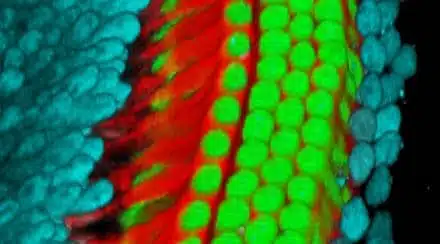
New research shows that harnessing the regenerative power of early supporting cells of the inner ear could lead to new strategies to combat many causes of deafness.
Read More
Researchers at University of California, San Diego School of Medicine have published findings from two studies of EEG testing, showing that certain types of EEG tests may help clinicians understand and treat schizophrenia with new approaches related to auditory processing.
Read More
In the General Session of the 2014 Academy of Doctors of Audiology (ADA) Convention held November 6-9, 2014 in Las Vegas, Kathleen Campbell, PhD, of Southern Illinois University School of Medicine, gave an interesting and lively talk on ototoxicity and the role of pharmaceutical agents in hearing loss management and prevention.
Read More
Researchers at Brigham and Women’s Hospital found that consumption of 2 or more servings of fish per week was associated with a lower risk of hearing loss in women. “Consumption of any type of fish (tuna, dark fish, light fish, or shellfish) tended to be associated with lower risk. These findings suggest that diet may be important in the prevention of acquired hearing loss,” stated lead-author Sharon Curhan.
Read More
Researchers from Tel Aviv University have discovered that a genetic form of deafness is due to absence of thyroid hormone.
Read MoreA study of 43 children with autism spectrum disorder indicated that, the more time required for an ASD individual to process auditory signals, the more severe that person’s autistic symptoms. “This is a first step toward developing a biomarker of autism severity—an objective way to assess someone’s place on the ASD spectrum,” said co-author Sophie Molholm. “Using EEG recordings in this way might also prove useful for objectively evaluating the effectiveness of ASD therapies.”
Read More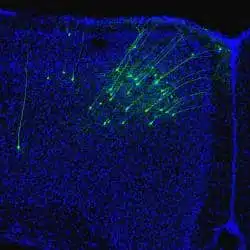
How does the brain determine if a sound source is in motion? New research from Duke University recently looked into this question using cutting-edge methods in electrophysiology, optogenetics, and behavioral analysis.
Read More
Continuing education is the secret to helping patients with vestibular disorders.
Read MoreResearchers have identified a characteristic molecular pattern shared by head and neck, lung, and some bladder cancers. The molecular profile offers information that could help physicians diagnose and develop new treatment strategies for these diseases.
Read More
New research finds that higher caffeine intake is associated with lower rates of tinnitus.
Read More
Researchers have mapped the sound-processing part of the mouse brain in a way that keeps both the proverbial forest and the trees in view.
Read More
A three-year-old is the first child in the United States to undergo an auditory brainstem implant surgery in an FDA-approved trial supported by a National Institutes of Health clinical trial grant.
Read More
David Kirkwood takes a look at new listening devices from a California high-tech start-up.
Read More
Finding polySia-NCAM— a functional biomarker that modulates neuronal differentiation— on adult inner ear neural stem cells after differentiation gives researchers a “handle” to identify and isolate these cells from among the many cells taken from a patient. The discovery will enhance research into spiral ganglion neurons and may bring treatments closer to patients with hearing deficits.
Read More
Researchers have discovered the link between antibiotics and bacterial biofilm formation leading to chronic lung, sinus and ear infections.
Read More