Blog: Editor’s Top-10 Picks of 2016 Articles (and More!) in Hearing Review
Here are some excellent articles and columns that you shouldn’t miss from The Hearing Review during 2016.
Read More

Here are some excellent articles and columns that you shouldn’t miss from The Hearing Review during 2016.
Read More
In the past several years the hearing aid industry has introduced some ingenious solutions to handling the “music and hearing aids” problem. Simply stated, the higher level inputs of music tend to overdrive the analog-to-digital (A/D) converter or “front end” in many hearing aids. Dr Chasin discusses some possible solutions for music listening.
Read More
In response to requests for more “bling” in its in-ear monitors (IEMs), Sensaphonics is debuting its Crystal Glitter colors for a “Glisten While You Listen” holiday promotion that offers discounts on special IEMs and Musicians Earplugs through December 31, 2016.
Read More
Electronic hearing protection is useful for hunters, military personnel, and musicians, says Marshall Chasin, AuD. They look and act like hearing aids, and technically (though not in some jurisdictions), they are hearing aids.
Read More
In October, experts in safe sound at Sensaphonics held their final Gold Circle seminar of 2016, teaching audiologists hearing wellness principles and concert sound system basics, with a primary focus on in-ear monitors.
Read More
How important is the wired earphone jack on a smartphone? Dr Chasin finds that current wireless earphones don’t protect our ears from excessive sound levels as many wired earphones do, and hopes wireless earphone technology catches up to smartphones soon.
Read More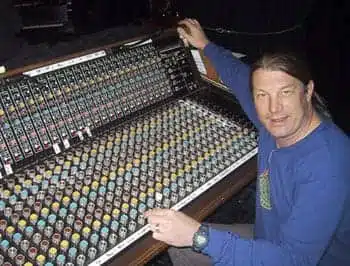
At the upcoming AES Convention in Los Angeles, Michael Santucci, AuD, will join legendary sound engineer Mark Frink for a presentation on “Safe Sound & IEM Fundamentals.” The session takes place Saturday, October 1, 2016 at 12:00 PM on the Live Sound Events stage.
Read More
The New Orleans Musicians’ Clinic & Assistance Foundation (NOMAF) has been “keeping New Orleans music alive” since 2005, after Hurricane Katrina. NOMAF provides hearing health information as part of its wellness program for New Orleans musicians.
Read More
What physical parameters constitute a good sounding musical venue? To find the answer, Dr Chasin refers back to Wallace Clement Sabine (1868-1919) — a physicist and Harvard Professor who was arguably the most famous name in architectural acoustics.
Read More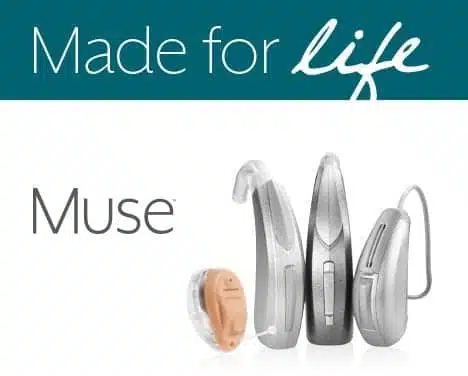
Starkey announces the success of its Synergy® platform, which is driven by its quad core twin compressor technology and powers the company’s Muse™ wireless hearing aids. Starkey also announces the launch of the Muse BTE 13 hearing aid, particularly suitable for music lovers.
Read More
We learn to give instructions and ask basic audiology questions in several languages, but covering the entire range of dialog is not always feasible. Google Translate and similar programs have become a vital part of our clinical toolkit, but how accurate are they?
Read More
According to BHI, research shows that earplugs not only help music-lovers avoid post-concert “ringing in the ears” (tinnitus), but also the temporary hearing loss that can occur after exposure to loud music or noise.
Read More
Touring musician Jeff Snider preserves his hearing with 2X-S custom in-ear monitors and a dB Check in-ear sound level analyzer from Sensaphonics, which have improved his onstage monitoring on the road.
Read More
Why do we tap our feet or move to a musical beat? In a study from the University of Oslo, researchers explore the theory behind the relationship between hearing musical sound and body movement.
Read More
Marshall Chasin, AuD, discusses the Minimal Audible Field (MAF), or the softest sound that normal-hearing people can hear in the normal diffuse sound field at 1000 Hz, and explains why sometimes less is more.
Read More