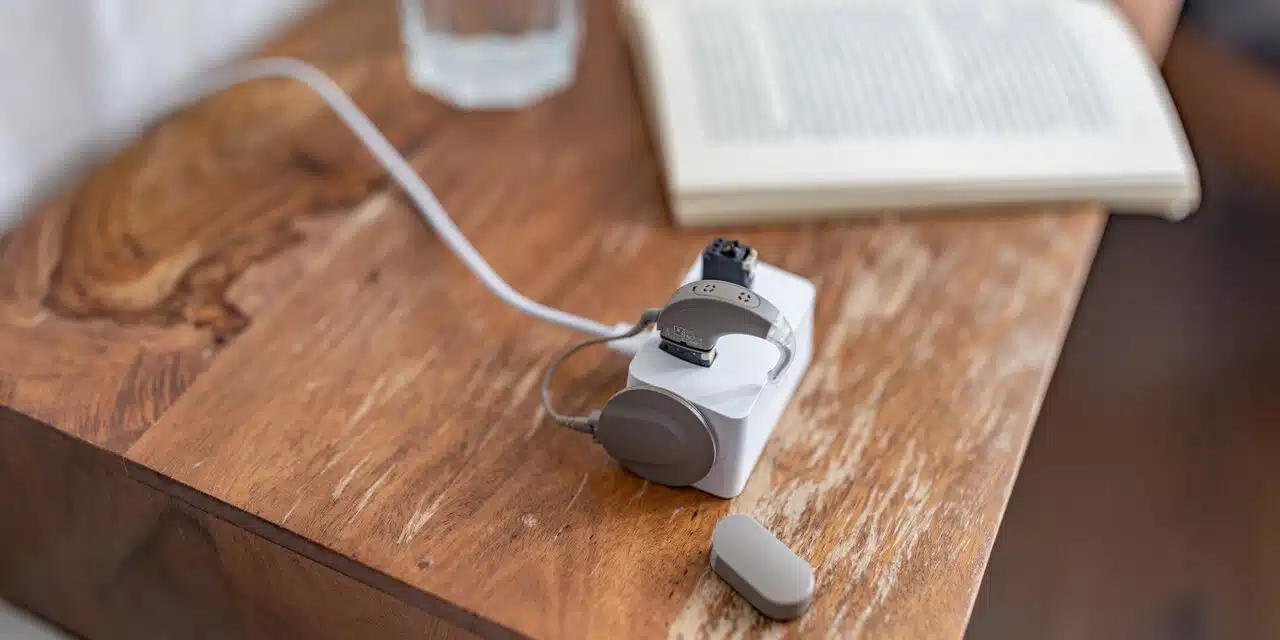
The new battery options offer up to 23 hours of hearing on a single charge and are compatible with Med-El implants dating back to 1994.
Med-El US has announced the consumer availability of two new rechargeable battery options — the Standard Pro and Micro Pro — compatible with both the Sonnet 2 and Sonnet 3 audio processors. The batteries are designed to extend usability and flexibility for cochlear implant recipients in everyday listening situations.
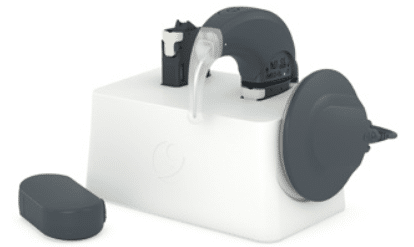
The Standard Pro battery delivers up to 23 hours of hearing on a single charge, while the Micro Pro provides up to 12 hours. Both feature a simplified two-part design, support over 1,100 charging cycles, and reach a full charge in up to three hours. Users can charge the batteries while they remain attached to the processor or separately, with magnetic alignment and LED indicators on the charger aiding ease of use.
A notable aspect of the new batteries is their backward compatibility — the runtimes are supported across Med-El implants dating back to 1994, meaning many existing recipients can upgrade without requiring a new implant. Compatibility with the Sonnet 2 processor also ensures a straightforward transition for current users of that platform.
“The peace of mind from having a full day of battery life to support all of Sonnet 3’s features have been fantastic,” says Med-El CI recipient Scott Murray, in a release. “I now have the freedom to wear either the Rondo 3 or the Sonnet 3 without giving any thought to spare batteries.”
Each battery kit includes child-safe battery covers, USB-C charging capability with the battery on or off the processor, magnetic alignment, and an LED status light. Med-El also notes that the packaging has been designed to be compact and eco-friendly, reducing plastic waste.
The Standard Pro and Micro Pro batteries are available for purchase through the myMed-El online shop and at medel.com.
Featured image: The new Standard Pro and Micro Pro rechargeable battery options are compatible with Sonnet 2 and Sonnet 3 processors and with Med-El implants dating back to 1994. Photo: Med-El