
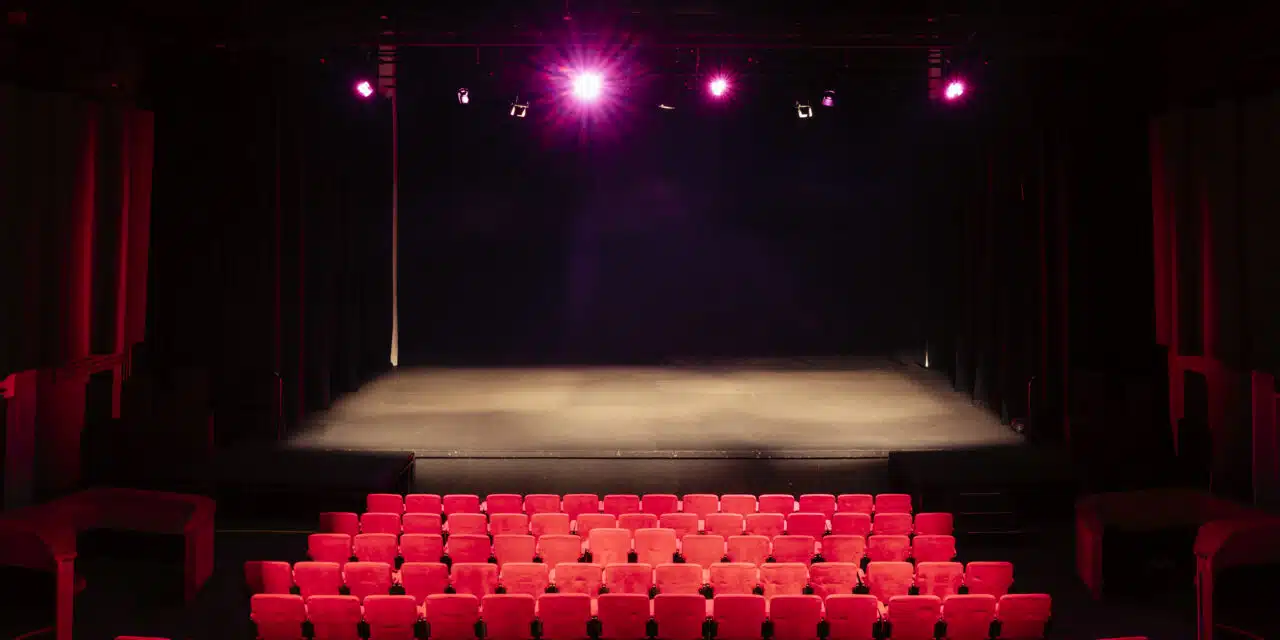
Experiences at two theaters in the UK show how Auracast can improve live theater accessibility by delivering clear, personalized audio directly to users’ devices, enabling greater inclusivity and flexibility.
Live theater has always presented a particular challenge when it comes to accessibility. Performances are dynamic, acoustic environments are complex, and many traditional assistive listening systems haven’t caught up with rapidly evolving technological needs. For audiences with hearing loss – and for the venues trying to support them – that gap has often resulted in compromise.
But a new generation of technology is beginning to change what’s possible. Auri, the only Bluetooth Auracast broadcast audio–based assistive listening system currently available in the UK, is already being adopted by a small but growing number of theaters. Their experiences show how assistive listening can move beyond simply making sound louder, towards something more precise, personal, and inclusive.
Reframing Limitations as Opportunities
At the Everyman Theatre in Cheltenham, accessibility decisions are shaped by long-standing relationships with local organizations and by listening directly to audiences. Francesca Goddard, Individual Giving and Corporate Partnership Manager and one of the theatre’s audio describers, is open about the fact that the team does not position itself as an expert.
“We’re learning as we go,” she says. “The most important thing has been having conversations – with our audiences, and with organizations like Gloucestershire Deaf Association.”
Those conversations made it increasingly clear that the theatre’s existing infrared assistive listening system was no longer fit for purpose. Some elements were close to 20 years old, headsets regularly failed, and coverage in the Victorian, listed building was inconsistent. In certain seats – particularly under the dress circle – the signal could drop out altogether.
“We were turning people away because we didn’t have enough working headsets,” Goddard explains. “And people expect more now. They expect clarity, reliability, and the ability to use modern devices.”
The technical limitations were frustrating for audiences and staff alike, particularly for audio-described performances where hours of preparation could be undermined by unreliable technology.
What Does Auracast Do?
This is where Auracast comes in. It works differently than traditional assistive listening systems; instead of amplifying sound within a space, it broadcasts audio directly over Bluetooth to compatible hearing instruments, smartphones, or dedicated receivers. That distinction has profound implications. At Contact in Manchester, Production Manager Adam Steed describes it as a fundamental shift.
“We’re no longer amplifying a room,” he says. “We’re delivering a direct signal.”
Auracast allows venues to take an audio feed straight from the sound desk and broadcast it directly to listeners. For the first time, this means assistive listening can be treated as its own carefully considered mix, rather than a by-product of the room’s acoustics.
Research and audience feedback at both theaters highlighted the same priority: dialogue. For many people with hearing loss, understanding the narrative matters more than hearing every element of the sound design.
“People don’t come to the theater to hear louder sound,” Steed says. “They come to understand the story.”
Using Auracast, sound engineers can prioritize microphones and voices, adding music or atmosphere only where it genuinely supports the production. The result is clarity rather than volume and is delivered with such low latency that lip-readers reportedly struggle to detect any delay at all.
What Are the Real-World Benefits of Auracast for Theatergoers?
The change in audience experience has been immediate and, in some cases, deeply emotional.
Goddard recalls one audience member who traveled to Cheltenham to try the system. Deaf for many years, he described the experience as feeling like someone was “speaking directly into his ears.”
“He had tears in his eyes,” she says. “He couldn’t believe the clarity, or that he could enjoy live theater again.”
At Contact, some of the most valuable feedback has come from British Sign Language (BSL) interpreters. Early trials revealed that device settings – such as ambient microphones being left on – could affect clarity. Once adjusted to a direct-feed-only mode, the difference was dramatic.
“An interpreter told us it made her job easier and improved the precision of her interpretation,” Steed says. “That was a really important moment for us.”
Beyond sound quality, Auracast has also removed long-standing physical and psychological barriers.
At the Everyman, audiences can now sit anywhere in the auditorium, rather than being restricted to specific seats where older systems worked best. There is no need to pre-book equipment; patrons can decide on the day whether they want to use it.
“That freedom of choice is huge,” Goddard says. “Accessibility shouldn’t dictate where someone sits or how they enjoy a performance.”
The system also supports a wide range of users. Those with Auracast-enabled hearing devices or smartphones can connect directly, while the theater provides simple handheld receivers for anyone without compatible devices.
Unexpectedly, Auracast has also benefited neurodivergent audiences. Some patrons prefer to control their sound environment using personal headphones, reducing sensory overload while still following the narrative at a comfortable level.
“It’s not just about hearing loss,” Steed notes. “It’s about giving people control.”
Making Auracast Work in Practice
Introducing new technology is never just about installation. At the Everyman, funding support from the Barnwood Trust helped make the upgrade possible, while Ampetronic, the company that created the Auri system, provided extensive guidance during both the funding and implementation stages.
The theater launched the system with an accessibility open day, inviting audiences to ask detailed questions about compatibility and use. Front-of-house staff have since been trained to support users and troubleshoot basic issues, helping build confidence on both sides.
At Contact, the system’s flexibility has been tested even further. It has been dismantled and reinstalled for site-specific productions in non-traditional venues, demonstrating how easily Auracast can adapt beyond fixed auditoriums.
Both theaters see Auracast as an investment in the future rather than a short-term fix. While not all hearing devices are yet Auracast-enabled, adoption is increasing, and audiences are already speaking to audiologists about upgrades. In the meantime, the availability of venue-provided receivers ensures no one is excluded.
Perhaps most significantly, both theaters are actively sharing their experiences. Other venues have visited to trial the systems, and conversations are ongoing across the sector about what assistive listening can (and should) look like going forward.
For Goddard, the takeaway is simple. “This has removed barriers we’d been struggling with for years,” she says. “And it’s shown us what’s possible.”
Auracast is still new, but these early adopters are already demonstrating how theaters and other venues can use it not just to improve access, but to fundamentally improve the experience of live performance for everyone.
This was originally published by BIHIMA. It has been republished with permission.


Wow! Only 20 years have passed since the first consumer Bluetooth receiver, and only eleven since the first in-aid version. Cannot such great developments get into public use much sooner? If smaller venues have no budget, could not local charities get set up to buy the simple equipment and recruit retired techs or physics undergrads to connect them? Do I hear Hear Hear?