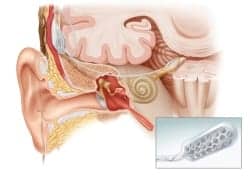
Cochlear has completed worldwide pivotal trial recruitment for its fully implantable cochlear implant system, with more than 100 patients enrolled across the full research program dating back to 2005.
Cochlear has announced the completion of recruitment for its worldwide pivotal trial program evaluating a fully implantable cochlear implant system, marking a significant milestone in the company’s long-running investigational hearing technology effort. Patients across the program have now accumulated more than 1 million hours of experience with the investigational device.
The announcement encompasses two pivotal studies — the ELEVATE study, conducted across 11 sites in the US, and the ENTERPRISE study, conducted across five sites in Europe and Australia — with a combined 92 adults enrolled. Including three earlier feasibility studies dating back to 2005, 117 patients have been enrolled across the full research program spanning three generations of investigational devices.
Pivotal Program Design and Next Steps
The ELEVATE study is designed to evaluate the investigational system in 56 adults, while ENTERPRISE is designed to evaluate it in 36 adults. A primary analysis of safety and effectiveness is planned at six months, with follow-up continuing to 12 months. Cochlear said ongoing follow-up and data collection will continue as the company advances its development program toward regulatory submissions.
“We are excited by the progress being made and remain focused on delivering technology that is safe, grounded in science and clinical evidence, and shaped by the needs of people living with hearing loss,” says Dig Howitt, CEO and president of Cochlear, in a release.
Howitt also noted the depth of experience the program has generated: “We now have more than 20 years of experience across three generations of investigational devices. This has given us a strong understanding of what recipients and clinicians need in everyday life. We’re committed to delivering meaningful real-world benefits for recipients,” he says in a release.
Four Critical Development Priorities
Cochlear outlined four priorities shaping its fully implantable technology development, drawn from lessons across three generations of devices:
- All-day hearing performance in everyday environments and implant battery longevity
- Internal dual-microphone technology designed for body noise cancellation, surgical simplicity, and streamlined programming
- A familiar surgical technique to minimize additional theatre and anesthesia time
- Confidence based on long-term clinical data, recipient insights, and a large evidence base
Clinical Investigators Weigh In
Prof Craig Buchman, MD, FACS, professor of otolaryngology-head and neck surgery at University of Utah Health and coordinating investigator of ELEVATE, underscored the importance of building an evidence base for the technology. “This pivotal program is building a robust evidence base on safety, performance and recipient outcomes – critical to advancing fully implantable hearing technology with clinical confidence,” he says in a release.
Buchman has been previously recognized in The Hearing Review for his contributions to the cochlear implant field, including being named the Niparko Memorial Lecturer for CI2026.
Prof Christophe Vincent, head of otology and otoneurology at Lille University Hospital and an investigator in the ENTERPRISE study, emphasized the potential quality-of-life implications of the technology. “ENTERPRISE will show how fully implantable hearing technology performs in everyday life and its potential to give people greater freedom and choice in how they hear throughout the day,” he says in a release.
A Reminder: Current Technology Remains the Standard of Care
Clinical experts involved in the trials were clear that the investigational nature of the technology should not discourage eligible patients from pursuing existing treatment options.
“Fully implantable technology holds great promise, but people who could benefit from a cochlear implant today should not wait for these future devices. Current cochlear implant technology is proven and can provide meaningful access to sound, improvements in communication and quality of life now, while research into fully implantable systems continues,” says Buchman in a release.
Cochlear’s latest commercially available cochlear implant is the Cochlear® Nucleus® Nexa® System. The investigational fully implantable system is not approved for commercial distribution, and safety and effectiveness have not yet been established. Regulatory evaluation will be required before the technology can be made commercially available.
The Hearing Review has previously covered the evolving landscape of fully implantable cochlear implant technology, as well as advances in fully implanted CI researchand FDA activity around fully implanted systems.