ReSound Sensia is a premium AI-powered hearing aid family that combines advanced environmental classification, beamforming, and DNN noise reduction to automatically help users focus on the people and sounds they choose to hear in noisy environments.
GN has announced ReSound Sensia, a new family of premium hearing aids built on the company’s new AI platform that uses a distinctive approach to sound processing designed to allow people to choose what they want to hear in noisy environments while aided by automated features.
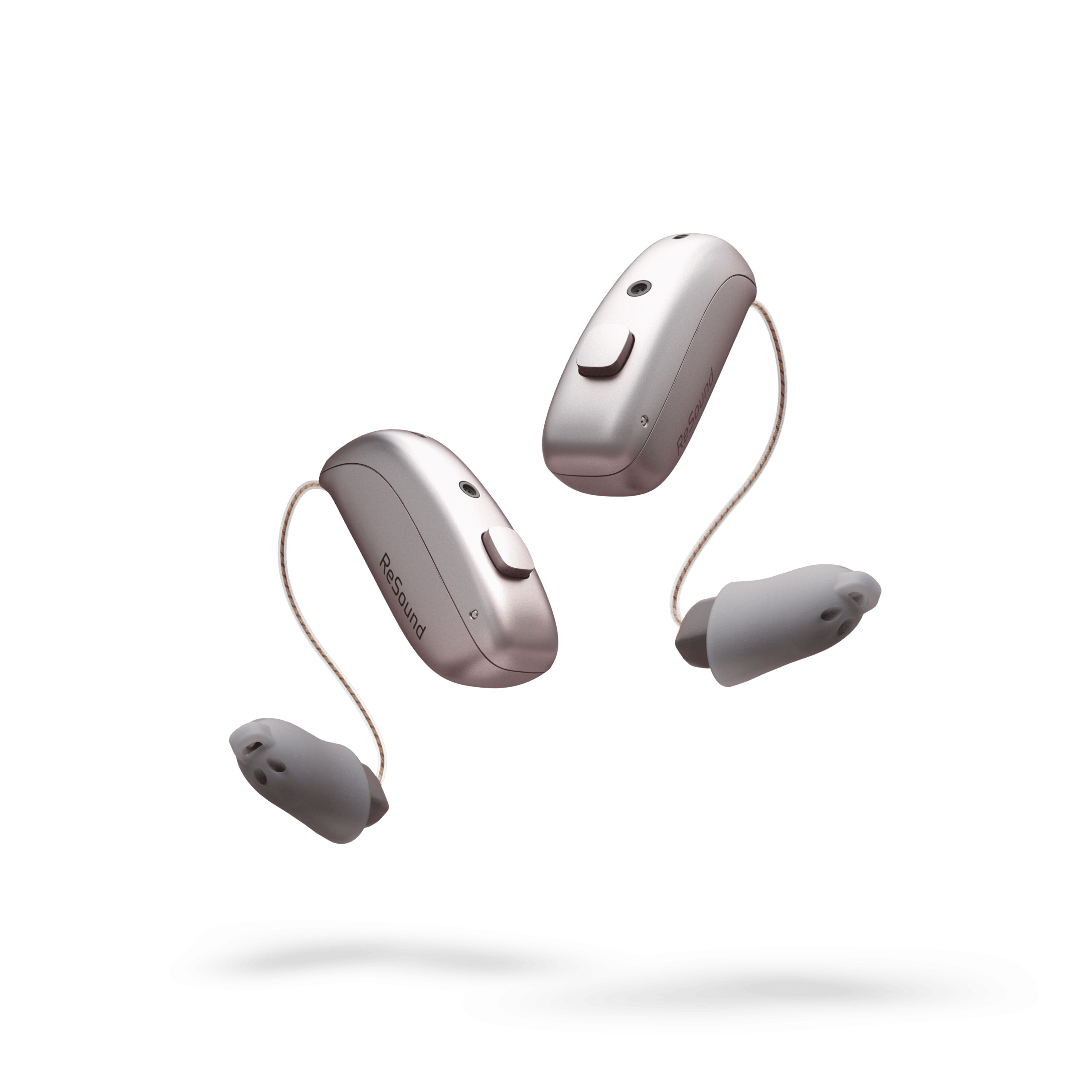
On the surface, ReSound Sensia resembles its predecessor, Vivia. Reportedly the smallest AI hearing aid, it uses essentially the same hardware and uses the same two-chip architecture including a dedicated deep neural network (DNN) chip. But the way the underlying technology works is very different.
In addition to its new AI platform, the new Intelligent All-Around sound processing system in ReSound Sensia “combines the world’s most accurate environmental classifier, an advanced 4-microphone directional beamformer, and Deep Neural Network (DNN) noise reduction to automatically lift the speech the user wants to focus on,” according to the company.
This combination of technologies is designed to enable users to hear what they want to hear when they want to hear it, automatically.
“At GN, we pattern hearing aids after how normal hearing people hear,” says Laurel Christensen, PhD, chief audiology officer at GN. “And that philosophy doesn’t change with the use of AI.” The method of achieving that goal with ReSound Sensia, of course, is new.
Intelligent All-Around
For the ReSound Sensia family of hearing aids, AcoustIQ is key to its new automatic Intelligent All-Around program approach to sound processing. Described as the brain behind the program, AcoustIQ (pronounced like acoustic) orchestrates listening environment classification and when to engage which directionality and gain features, with 88% greater accuracy in classification and feature engagement than the closest premium solution, according to GN. AcoustIQ also orchestrates ReSound Sensia’s beamforming technology that allows users to focus on what they want to hear by simply facing the speech source, in concert with DNN denoising to automatically help lift conversations.
Sound Environment Classification
AcoustIQ’s ability to classify sound environments is crucial because “Classification determines everything that is going to happen inside that hearing aid for the patient,” says Christensen. It determines what features will be activated, so accuracy is important.
In several demos, I heard how ReSound Sensia’s technologies change the hearing experience in reaction to the environment. One of the demos was set in a grocery store. It included loud sounds from shopping carts and people talking as well as piped in music. In this type of situation, music is essentially background noise.
“If your hearing aid classifies that as a music environment, then your hearing aid is not going to be set up at all for you to hear the person that you’re talking with,” Christensen explains, because it will activate the music program.
This is why ReSound Sensia does not classify music. It would complicate matters. The company’s philosophy is that people can decide when music is what they want to focus on and manually activate their music program, since listening to music is usually an intentional choice. It also doesn’t use DNN for classification because that approach was found to not be accurate enough.
“Our classifier is very simple,” says Christensen. “It just looks for speech, it looks for noise. It looks for the certain level of speech and noise and then it activates whatever the environment is [that it’s detected]. So then it’s going to activate your beamformers, it’ll activate the deep neural network, it’ll activate our noise tracker if it’s noise only. The importance is that it’s going to turn on the right features at the right time to give the patient the best opportunity they can to hear.”
Denoising
When it comes to denoising in hearing aids, methods can vary greatly. When someone wearing ReSound Sensia walks into a noisy environment, the hearing aid is designed to effectively suppress background noise, whether or not that involves speech.
When speech is involved, people don’t necessarily want the loudest speaker in the room to be what their hearing aid focuses on. So GN has developed technology to handle that. Intelligent Focus is a combination of 4-microphone beamforming and Intelligent Noise Tracker denoising, combining spatial and denoising processing.
In a speech and noise environment, AcoustIQ orchestrates ReSound Sensia’s 4-microphone beamforming technology and DNN denoising automatically activates when needed. Then the user intuitively decides who to listen to by turning their head to face the person they want to hear, and it works. This is thanks to the beamformers on both hearing aids being able to indicate directionality to guide the DNN.
“AI does this great job of separating speech and noise, but it’s not always the speech you want to hear,” Christensen says. “It took us a very long time to be able to integrate that beamformer with the deep neural network, so that if you’re standing in front of someone, then you have a better chance of that person’s voice being the prominent speech, rather than the prominent speech being somewhere else.” She says this was important to fit with GN’s philosophy that they “want the person to decide what they want to hear, rather than the hearing aid deciding.”
Because of this engineering feat, combining DNN with directionality, even if a person wearing ReSound Sensia is eating at a restaurant with friends and someone is speaking extremely loudly at a table off to their side, the beamformer should be able to lift the voice of whomever the wearer is looking at, ignoring the loud talker. Users can also push a button to manually select the “Hear in Noise” program to activate Intelligent Focus as an immediate way to focus on speech in front of them.
When an environment contains a lot of noise, but no prominent speech, GN’s team found that can cause problems for DNN denoising, such as creating artifacts. To account for this issue, GN put two separate noise reduction systems in the automatic program. Perceptual noise reduction (PNR) suppresses noise in a loud environment with no speech, and then when needed will switch to speech intelligibility mode and DNN denoising.
“Having the PNR and the DNN denoising in the same program is a significant thing,” notes Katie Ogden, head of product and partner marketing, GN Hearing division. “From an end user benefit perspective, if you are in a noisy place without speech and you don’t have any comfort being provided by any kind of noise reduction, that’s going to be exhausting.” ReSound Sensia’s ability to activate noise reduction in any noisy situation reduces listening effort for the wearer.
“Noise reduction isn’t about speech, actually,” Ogden emphasizes. “Noise reduction is about staying somewhere for longer without feeling like you have to just get out of there.”
Battery Life
ReSound Sensia offers battery life of 24 hours in the rechargeable microRIE and ITC/ITE styles. That means truly all-day battery life, even with DNN denoising activating automatically. This efficiency results in denoising that is 17x more efficient than other AI-powered hearing solutions, according to the company.
Bimodal Models
As part of GN’s collaboration with Cochlear through the Smart Hearing Alliance, they are also introducing ReSound Sensia Bimodal and ReSound Enzo IA Bimodal. These models are designed to work with Cochlear Nucleus sound processors to support integrated performance, reliable connectivity, and a seamless bimodal hearing experience, according to the company.
All in on Auracast
GN continues to fully support Bluetooth LE and Auracast broadcast audio, with all of the ReSound Sensia hearing aid models being Auracast compatible.
“The reason why they have Auracast is it runs on [an already included] chip and software, so thereby the product doesn’t become bigger. If you add a telecoil, it becomes bigger,” explains Thomas Olsgaard, principal engineer, GN Hearing division. “But we want to give them the option, because not every place has Auracast yet.” Two Sensia models also contain telecoils so wearers can still make use of hearing loops if that’s important to them.
Software Upgrades
Along with its new hearing aid family, GN is debuting upgraded fitting software for HCPs. ReSound Smart Fit 2.4 software incorporates the proprietary Audiogram+ as well as the NAL-NL3 prescriptive framework. It also features a more intuitive design to make it easier for HCPs to find what they’re looking for, including the functions they use most.
“It’s really been about focusing on ensuring the categories are what makes sense to the hearing care professionals,” says Sophie Hansen, senior director of product marketing and brand strategy, GN Hearing division.
Updating the interface also included moving the main navigation from along the top of the screen to the left-hand side, which Hansen says many HCPs are more familiar with and prefer because it allows them to more easily see and keep track of what steps to take and in what order.
“We’ve kept the things that people love about our fitting software, which is that flexibility to go in and really fine-tune the details of things if you choose to, but also having this universal approach,” says Ogden. “So if you’re someone who’s used it, it’s easier to go in and find the things that you’re used to finding, but if you’re brand new to the software, there’s familiarity there as well.”
Availability
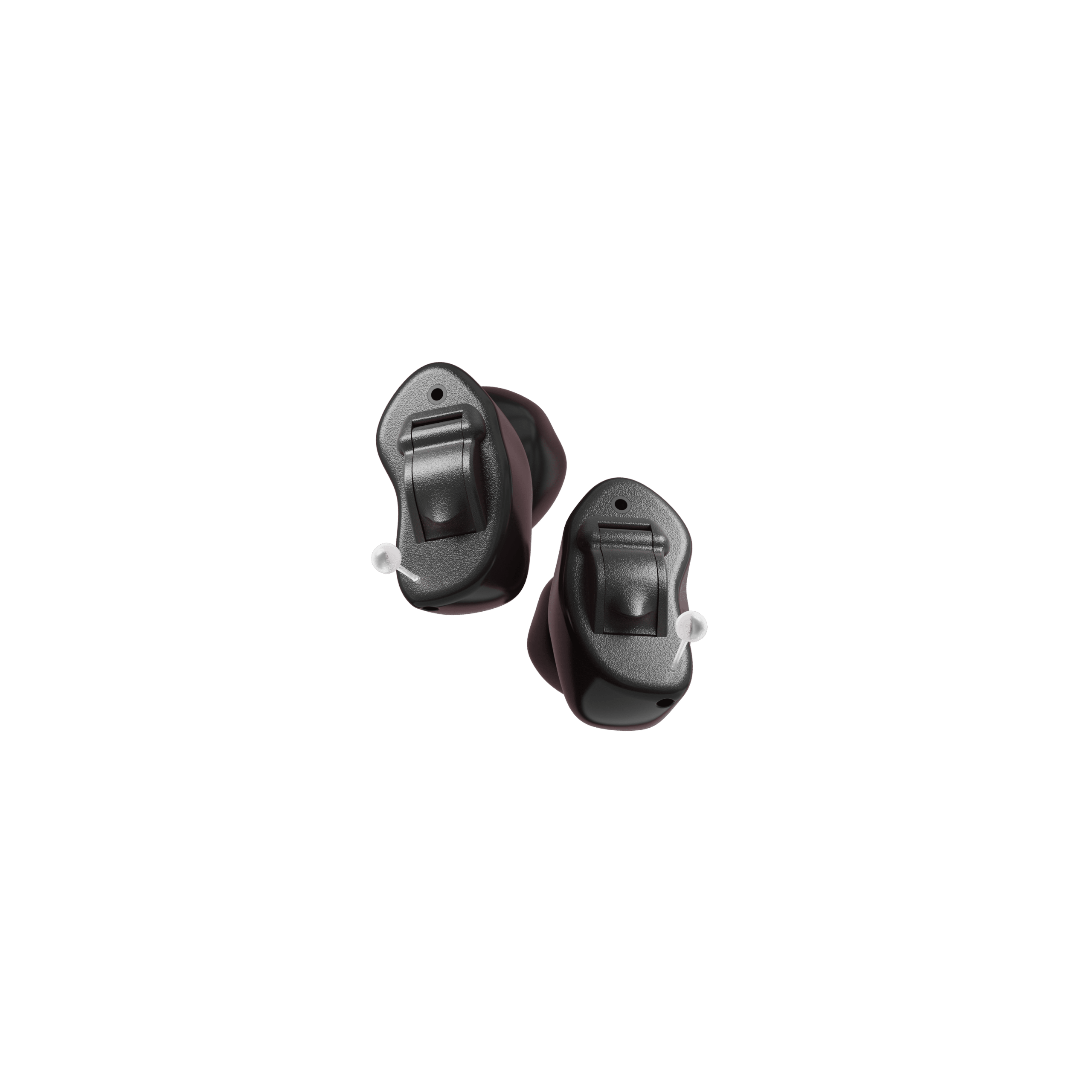
The ReSound Sensia range and the equivalent Beltone Illuminate family of hearing aids and the ReSound/Beltone Smart Fit 2.4 fitting software will be available in the U.S., Germany, and Austria on August 20, with more markets to follow in the coming months. Available in microRIE (Receiver-in-Ear), RIE (Receiver-in-Ear) styles with ZincAir 312 and 13 batteries, non-wireless CIC (Completely-in-Canal) custom-made style, wireless ITC (In-the-Canal) custom-made style, and rechargeable ITC (In-the-Canal) and ITE (In-the-Ear) custom-made styles.
To explore the ReSound Sensia family of premium hearing aids, visit https://www.gnhearing.com/en/products/hearing-aids/sensia.