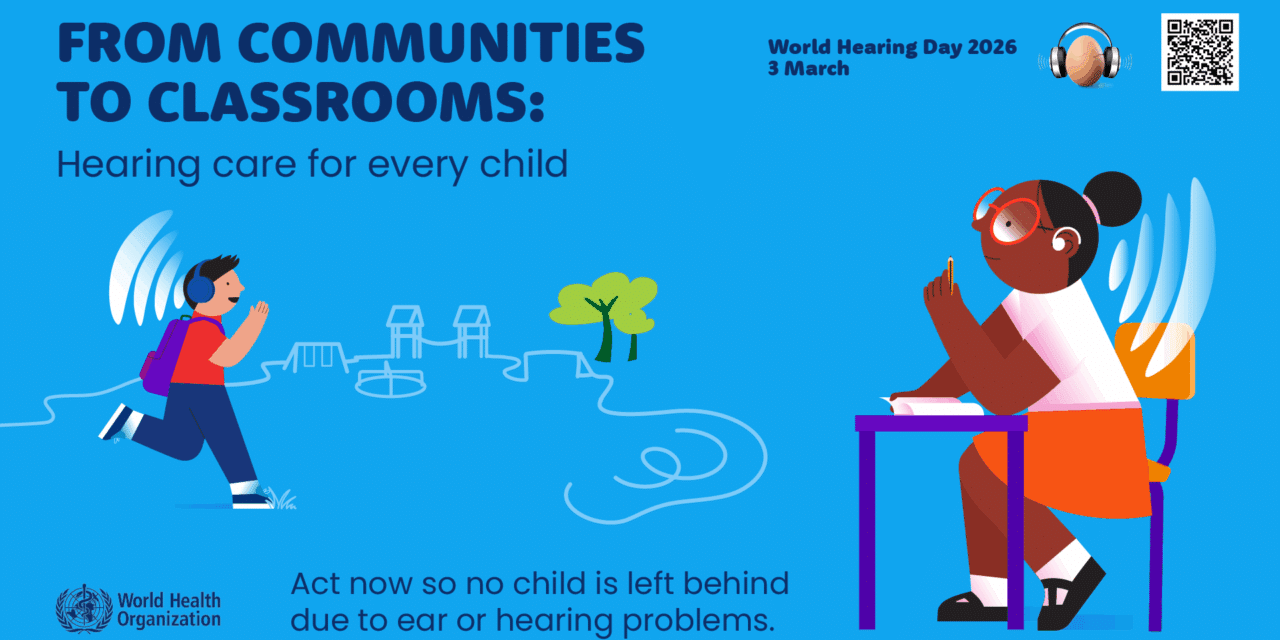
The campaign, themed “From communities to classrooms: hearing care for all children,” highlights the need for early screening and intervention.
This year for World Hearing Day, observed annually on March 3, the World Health Organization (WHO) is drawing attention to childhood hearing loss. For World Hearing Day 2026, the campaign, themed “From communities to classrooms: hearing care for all children,” emphasizes the importance of identifying and addressing ear and hearing problems in pediatric populations to prevent long-term developmental and educational challenges.
According to the WHO, approximately 90 million children and adolescents aged 5-19 live with hearing loss globally. The organization states that over 60% of childhood hearing loss is preventable through public health measures. Unaddressed hearing issues can significantly impact a child’s speech, language, and cognitive development, often leading to poorer educational outcomes and reduced employment prospects later in life.
Focus on Integration and Early Intervention
The 2026 campaign calls for the integration of systematic hearing screening and early intervention services into existing school health and child health programs. The WHO notes that common and treatable conditions, such as otitis media with effusion (OME), chronic suppurative otitis media (CSOM), and impacted ear wax, are widely prevalent causes of hearing loss in children. Early identification is crucial for preventing lasting effects on a child’s development.
A key message from the campaign is the need for multi-sectoral collaboration. The WHO is urging stakeholders in ear and hearing care to work with professionals in school health, child health, primary care, and education to implement effective programs.
WHO Releases Tools for Professionals
In support of the campaign, the WHO is promoting several technical resources for healthcare providers and public health officials. These include:
- Vision and hearing screening for school-age children: implementation handbook: A guide for establishing screening programs.
- Basic ear and hearing care resource: Materials designed to train non-specialist health workers in preventing and treating common ear diseases.
- mSafeListening handbook: A resource providing evidence-based message libraries to promote safe listening behaviors.
The organization also announced that new tools are forthcoming, including WHOears, a tone-based hearing screening app, and Smart hearing for children, a series of educational videos for children aged 5-8.
The WHO encourages organizations to register their local World Hearing Day 2026 events to increase global visibility for pediatric hearing care initiatives.