Summary:
Tinnitus Stepped-Care by James A. Henry, PhD, introduces a standardized, step-wise clinical framework that brings consistency to tinnitus care while allowing clinicians to continue using their preferred, evidence-based treatment approaches.
Key Takeaways:
- The book addresses the lack of standardized tinnitus services and clinician credentialing by outlining a six-step, scalable care pathway from triage through expanded treatment.
- It provides practical, reproducible clinical tools, assessments, and decision-support algorithms to promote consistency across clinics and providers.
- Designed primarily for audiologists, the framework is also applicable to psychologists, mental health clinicians, and otolaryngologists involved in tinnitus assessment and management.
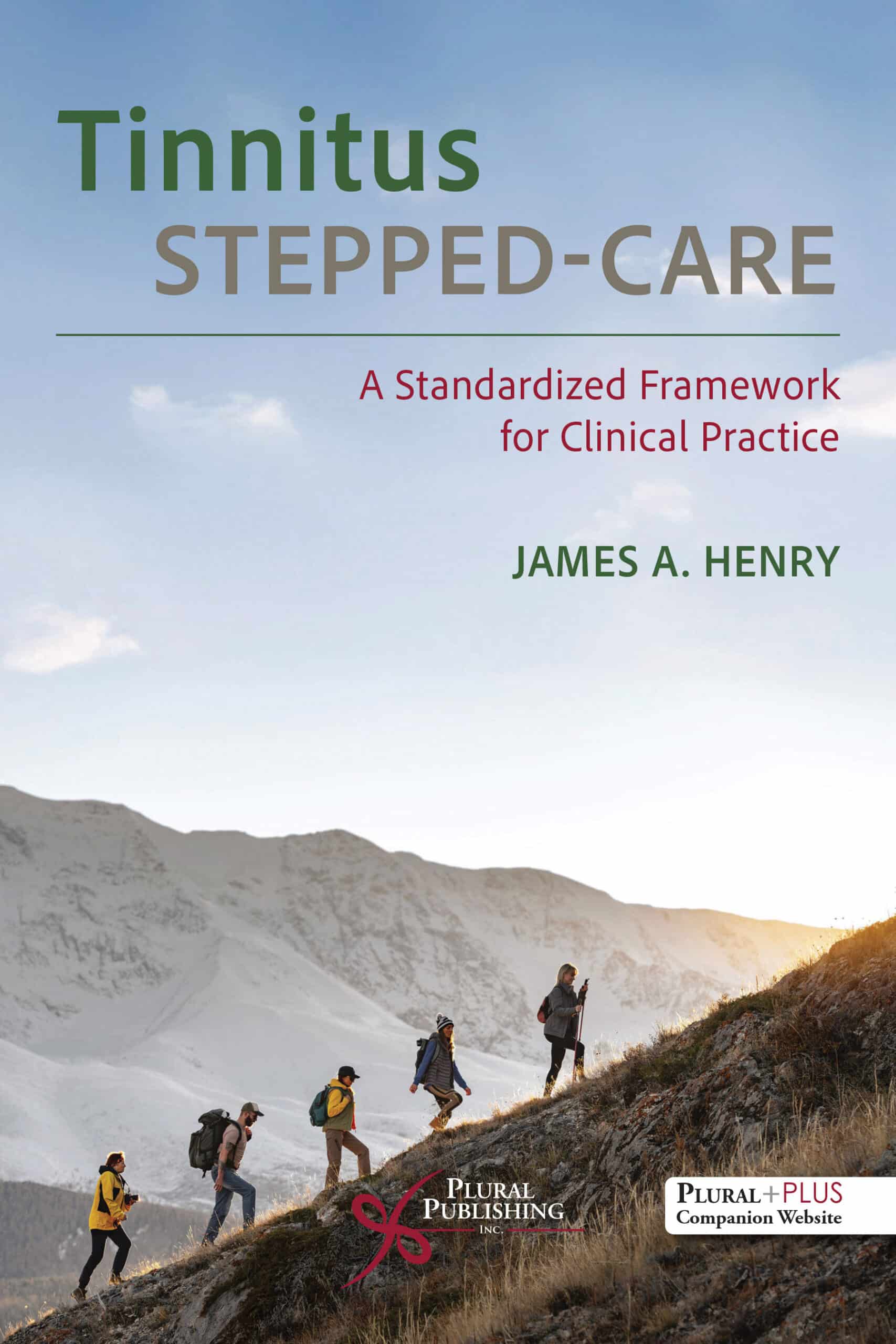
Tinnitus clinical services are far from standardized and there is no system for credentialing clinicians for competency in providing tinnitus care. While a number of well-established, research-based methods are available for the clinical management of tinnitus, no one method has been proven more effective than the others, and differences in methodology result in different outcomes. Authored by James A. Henry, PhD, internationally recognized tinnitus researcher and clinician, the book Tinnitus Stepped-Care: A Standardized Framework for Clinical Practice provides a clinical path to follow for addressing these differences in order to deliver tinnitus care in a logical, step-wise fashion. Clinicians can continue to utilize their preferred methodology, but within the uniform framework that is offered by Tinnitus Stepped-Care.
A clinic adopting this framework would follow these specific steps:
• Step 1 – Triage: Inform other hospitals and clinics in their geographic area about tinnitus and how to properly refer patients who complain of tinnitus.
• Step 2 – Audiology Services: Conduct the initial assessment of patients using a minimum of specific measures that are consistent across clinics.
• Step 3 – Tinnitus Education: Advance patients with bothersome tinnitus to learn about tinnitus, how and why it can be bothersome, and what realistically can be done about it.
• Step 4 – Tinnitus Counseling: Make available an established, research-based method of treatment for tinnitus.
• Step 5 – Comprehensive Assessment: Conduct a comprehensive assessment for patients who require further care to determine why services thus far have been inadequate.
• Step 6 – Expanded Treatment: Provide further treatment or refer patients to another tinnitus specialist to address any needs identified in Step 5.
Key Features of the Book Tinnitus Stepped-Care:
• Includes reproducible clinical tools and assessments, such as the Tinnitus Screener, Tinnitus and Hearing Survey, Sound Hypersensitivity Interview, and Tinnitus Interview
• Provides detailed clinical algorithms, flowcharts, and visual aids, including the Step 2 Audiology Services Decision Tree and the comprehensive Tinnitus Stepped-Care flowchart to support decision-making
• A dedicated chapter on how to screen for and assess loudness hyperacusis, pain hyperacusis, misophonia, noise sensitivity, and phonophobia
• Discusses how testing the stepped-care approach could be done with the creation of a learning health network (LHN) that is specific to tinnitus to foster collaborative clinical research and standardize tinnitus care nationally
While primarily written for audiologists who are the main providers of tinnitus clinical services, this book is also appropriate for psychologists and other mental health clinicians who provide tinnitus counseling, and for otolaryngologists who often see tinnitus patients and may be unaware of the step-wise clinical procedures for providing tinnitus care.
For more information, visit https://www.pluralpublishing.com/publications/tinnitus-stepped-care-a-standardized-framework-for-clinical-practice.