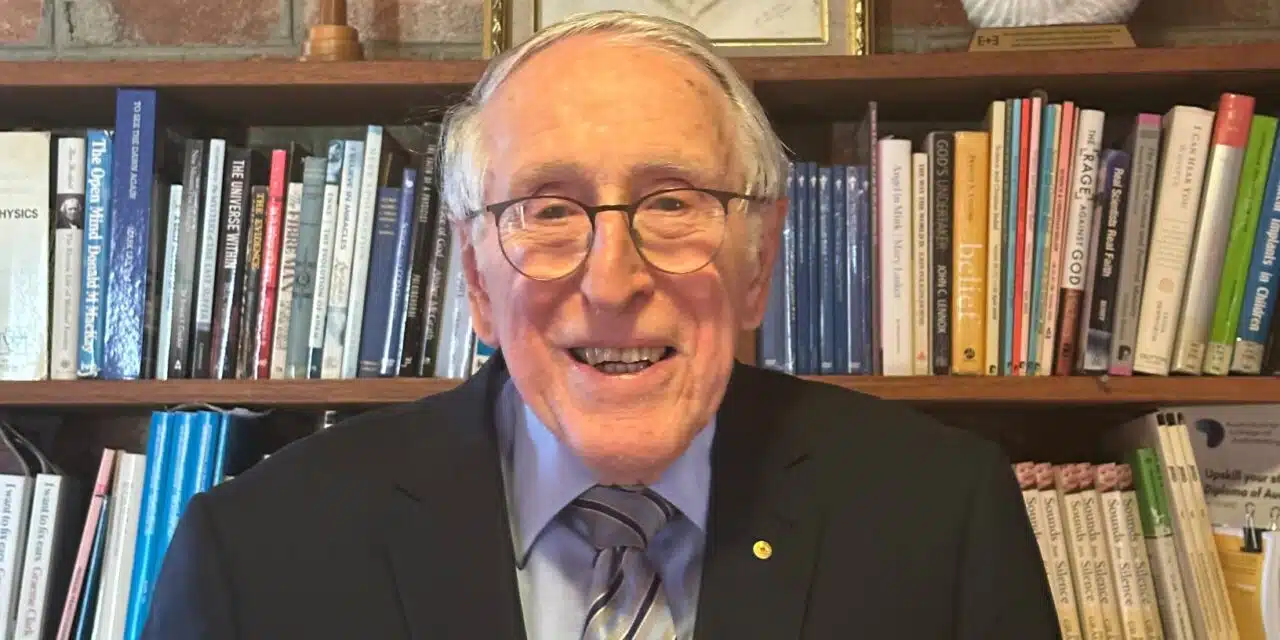
The award recognizes the multichannel cochlear implant developer and other laureates for their contributions to neuroengineering.
Professor Graeme Clark AC, whose work led to the development of the multichannel cochlear implant, has been named one of the recipients of the 2026 Queen Elizabeth Prize for Engineering (QEPrize). The prize, announced in London, this year recognizes achievements in neuroengineering.
Clark is one of nine laureates recognized for their collective contributions to neural interface technologies. The group will share the £500,000 prize. This year’s prize also honors Erwin Hochmair, Ingeborg Hochmair, and Blake Wilson for advances that helped develop cochlear implants into widely adopted clinical technologies. Other laureates were recognized for work in deep brain stimulation, brain-computer interfaces, and electronic spinal stimulation.
“Professor Clark’s vision transformed what was once considered impossible into a life-changing reality for people around the world. His pioneering work not only laid the foundations for Cochlear as a company, but opened the door for millions to experience sound, connection, and opportunity,” says Dig Howitt, Cochlear CEO and president, in a release. “We congratulate Professor Clark and celebrate his extraordinary contribution to engineering, healthcare, and humanity.”
The research established the scientific and engineering foundations for what is now a global standard of care for many people with severe to profound hearing loss. More than one million people worldwide now use cochlear implants.
“My work in auditory brain science began with the aim of restoring hearing for people with severe deafness, inspired in part by my own family’s experience. Over time, this research showed that multi-channel stimulation of the auditory nerve could restore elements of hearing, opening the door to an entirely new field of medical engineering,” says Professor Clark, in a release. “I am honoured to be recognised alongside my colleagues by the Queen Elizabeth Prize for Engineering, and proud to see how this field has grown to help people with a wide range of neurological conditions.”