
With every major brand offering a new AI-powered device, hearing care professionals have many distinct technological philosophies to choose from.
By Melanie Hamilton-Basich
The year 2026 is a big one for premium hearing aid technology, with all six major brands launching new AI-powered platforms. While artificial intelligence has been part of hearing aids for some time, this new wave of devices showcases a significant divergence in how deep neural networks (DNNs) are being designed and deployed. Each brand follows a distinct philosophy to tackle the persistent challenge of hearing in complex, noisy environments.
For hearing care professionals, this specialization offers a more nuanced toolkit. The conversation with patients is shifting from whether a hearing aid has AI to how it uses AI. Some platforms prioritize a natural, immersive soundscape by balancing speech with environmental context, while others offer more intense on-demand noise reduction. Some systems are always on, making automated decisions for the wearer, while others put the user in control. These differing strategies reflect a deeper understanding of the varied needs and preferences of individuals with hearing loss.
“A deep neural network is very nice to have. You train them to do a very specific thing, but we’re not all training them to do the same things,” says Laurel Christensen, PhD, chief audiology officer at GN. “And we certainly aren’t training them in exactly the same ways.” This variety is creating a new landscape for HCPs, where understanding the technology under the hood is key to matching the right device to the right patient.
Oticon Reveal: Balancing Speech and Context
Oticon’s philosophy, rooted in its BrainHearing approach, argues that the brain needs access to the full sound scene, not just isolated speech, to function optimally. The new Oticon Reveal platform aims to enable this with a Dual AI system that runs two deep neural networks, called Speech AI and Context AI, simultaneously, to find the right balance between the two.
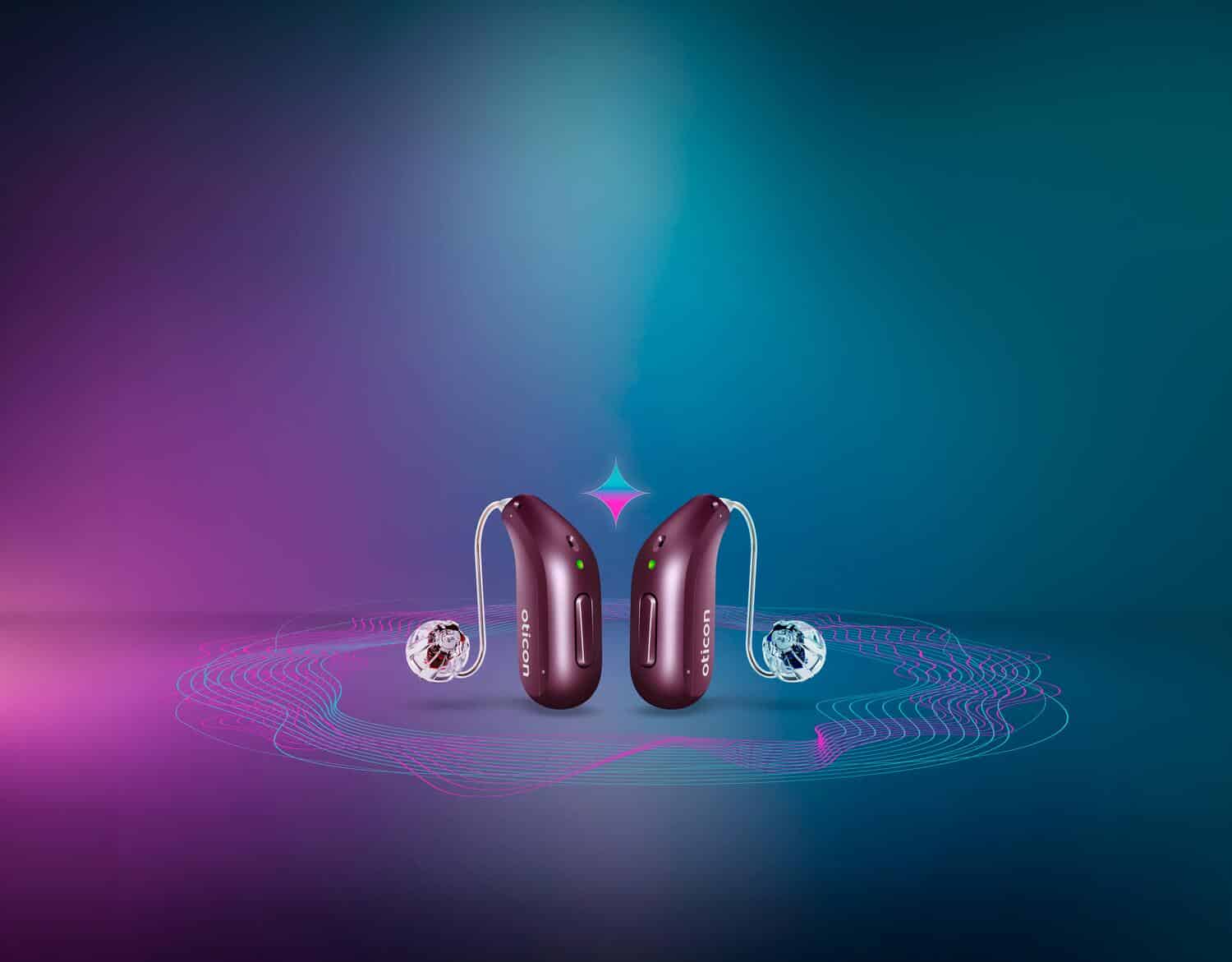
The Speech AI identifies and enhances speech, while the Context AI preserves and balances surrounding sounds. This approach deliberately avoids the more intense noise suppression used by some other systems, according to Susanna Løve, global director of commercial audiology at Oticon. “We’re learning that this division between speech and noise with a hard line in the middle doesn’t allow us to talk about nuance, [where] sometimes what may have been seen system-wise as noise is actually useful context for the brain,” she explains. “In the past, we have used DNNs for what you could call noise suppression, but I would like to instead think of it as a balance point between how much speech and how much context we want in a given moment.”
She describes the Dual AI system as fluid, not mode-based, continuously adapting as the soundscape changes to find the sweet spot that best enhances hearing for the user in that moment.
Underpinning this AI system is the Reveal Optimizer, an advanced feedback management system. Løve emphasizes that the more powerful the AI is, the more solid a foundation is needed to support it. “Quick shifts in gain as a result of AI signal processing can challenge a feedback system,” she says. “Additionally, lack of stable gain in frequencies at high risk of feedback means that the benefits of the AI cannot be fully realized. So the Reveal Optimizer is the key enabler of optimal AI functionality.”
Phonak Eon: Automatic Intelligence
Phonak’s Eon platform is built on the new HyperSonic chip and combines two parallel AI systems: AutoSense OS AI 8.0 and Spheric Speech Clarity 3.0. This pairing is designed to provide a fully automatic experience that adapts to listening situations while enhancing speech understanding.
“The AutoSense OS is like the brain of the hearing aid,” says Christine Jones, AuD, vice president of North American audiology, clinical excellence, and professional affairs at Sonova. “It is the control center that’s constantly monitoring where you are, what you are doing, and what is your most likely listening intent in this scene.” This scene selection system analyzes the environment 700 times per second and automatically activates the necessary features.
One of those key features is Spheric Speech Clarity 3.0, a large DNN model that extracts and enhances speech from any direction. Unlike traditional beamforming that requires facing the speaker, this system picks up voices from all around, making speech
twice as likely to be understood and reducing listening effort by 35%, according to the company. The new HyperSonic chip provides these capabilities with greater power efficiency, allowing the
Eon to be 25% smaller and 20% lighter than the previous generation.
ReSound Sensia: User-Directed Focus
With its ReSound Sensia platform, GN focuses on empowering the user to decide what they want to hear. The core of this approach is the Intelligent All-Around system, which uses a sound-sensing and feature engagement technology called AcoustIQ to orchestrate its features. It combines an environmental classifier, an advanced four-microphone beamformer, and a DNN for denoising.
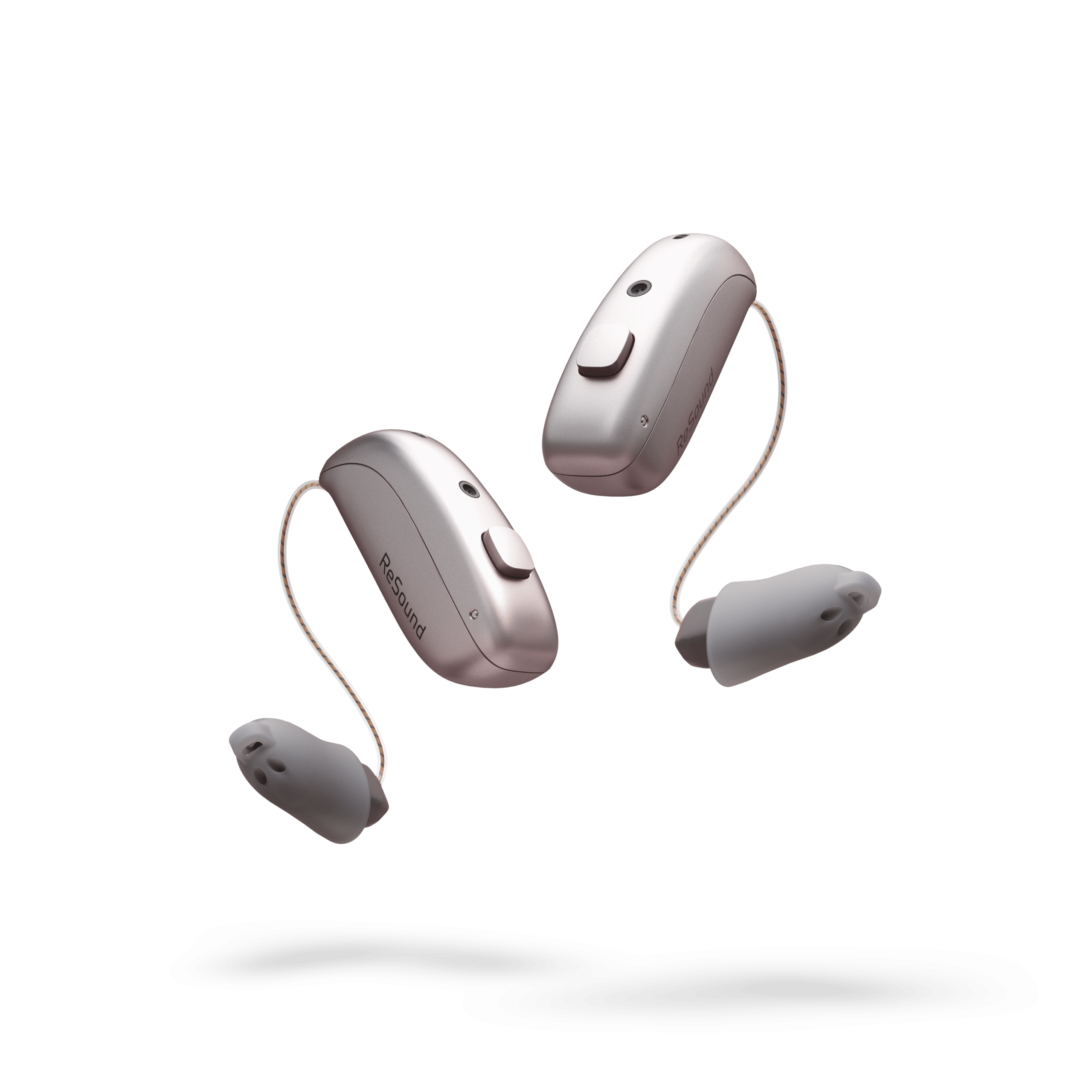
The key innovation is integrating the beamformer with the DNN. According to Christensen, many denoising DNNs are trained to simply identify and amplify the most prominent speech in an environment, regardless of the user’s intent. ReSound’s system uses the beamformer to give the speech directly in front of the user a better chance of being identified as the prominent signal. By turning their head, the wearer intuitively directs the hearing aid’s focus.
“AI does this great job of separating speech and noise, but it’s not always the speech you want to hear,” Christensen explains. “It took us a very long time to be able to integrate that beamformer with the deep neural network…we want the person to decide what they want to hear, rather than the hearing aid deciding.”
The platform also includes two different noise reduction systems within its automatic program. For noisy environments without speech, it uses perceptual noise reduction (PNR) for comfort. When speech is present, it switches to the DNN for denoising. This dual approach is designed to prevent the artifacts that can occur when a DNN trained for speech in noise is used in a noise-only situation.
Signia MaX: Thriving in Group Conversations
With the tagline “Live Noisy,” Signia’s Multi-adaptive Xperience (MaX) platform is squarely focused on improving performance in dynamic, multi-talker environments. Its Acoustic Intelligence system unites four task-specific DNNs that work together as one coordinated system: Speech Detection, Own Voice Detection, Scene Analysis, and Noise Processing.

This multi-dimensional approach allows the hearing aid to continuously adapt to the entire soundscape without scene switching or fixed modes, says Eric Branda, head of audiology and research, WSA. The Acoustic Intelligence system evaluates speech, noise, the wearer’s own voice, ambient sound, as well as motion cues simultaneously to make real-time processing decisions.
A key feature is Own Voice Processing AI, which instantly recognizes the wearer’s voice without needing in-clinic calibration. This is intended to provide immediate comfort and a more natural own-voice perception, a common challenge for new users. The platform builds on the RealTime Conversation Enhancement introduced in Signia IX, now processing 75% more data points per second for more precise tracking of multiple conversation partners. According to Signia, 97% of wearers perform better with Signia MaX in noisy group conversations compared to key competitors.
Starkey Omega AI+: Hearing, Health, and Wellness
Starkey continues to build on its philosophy of treating the hearing aid as a multipurpose health and wellness device. The new Omega AI+ platform is powered by the G4 Gen AI Neuro Processor and a proprietary Quad DNN Architecture, with four specialized DNNs working in real time. They’re trained to optimize speech understanding, environmental awareness, sound quality, and listening comfort.
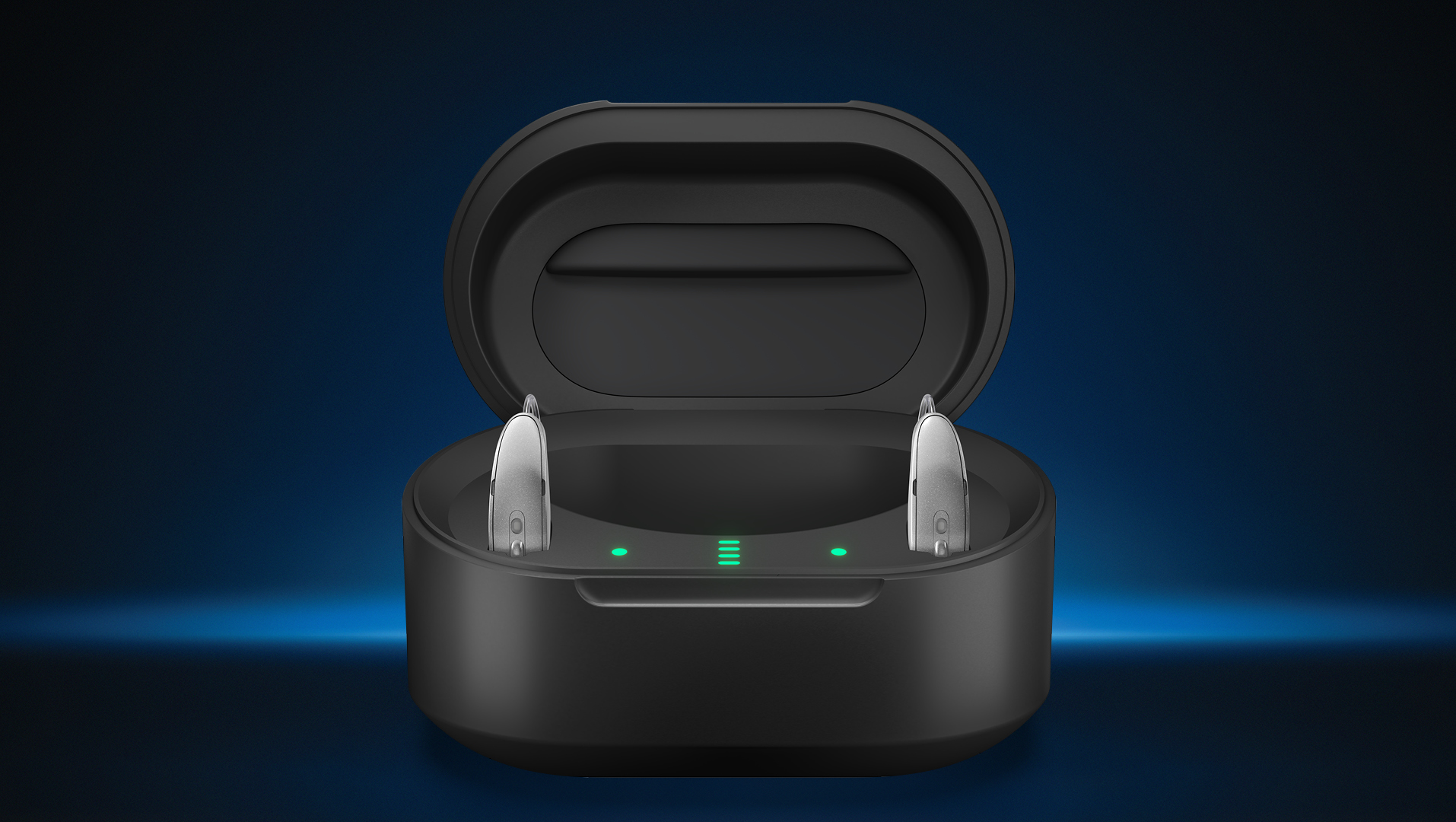
The always-on DNN 360 system is designed to manage audibility, directionality, and spatial awareness. To preserve spatial awareness, which can be compromised by aggressive beamforming, the system uses split-band directionality—omnidirectional in the low frequencies and directional in the highs. This allows the wearer to maintain awareness of sounds around them while still benefiting from noise reduction for high-frequency speech cues.
New to Omega AI+ is what Starkey is calling the world’s first DNN Dual Compressor, designed to intelligently balance fast and slow compression times to optimize for both speech clarity and listening comfort. “Our central philosophy… is to really put the patient at the center of all of this,” says Dave Fabry, PhD, chief hearing health officer at Starkey. “We’re developing the technology with the patient in mind, not merely to say on a benchmark test… what can we achieve, but how will patients accept the trade-offs between sound quality, signal-to-noise ratio, intelligibility, and that spatial awareness?”
Starkey also continues to leverage its onboard inertial measurement unit (IMU) to inform the AI about the wearer’s movement, adjusting microphone patterns accordingly. The platform also introduces new wellness features, including an industry-first sleep quality tracking function available in the U.S.
Widex Allure AI: On-Demand AI and Natural Sound
Widex takes a unique approach with its Allure AI RIC, building on its reputation for natural sound quality. The platform’s philosophy is that AI should be a tool the wearer uses on demand, not an always-on feature that alters the fundamental sound experience, says Carolyn Pinkerton, head of clinical education, WSA.
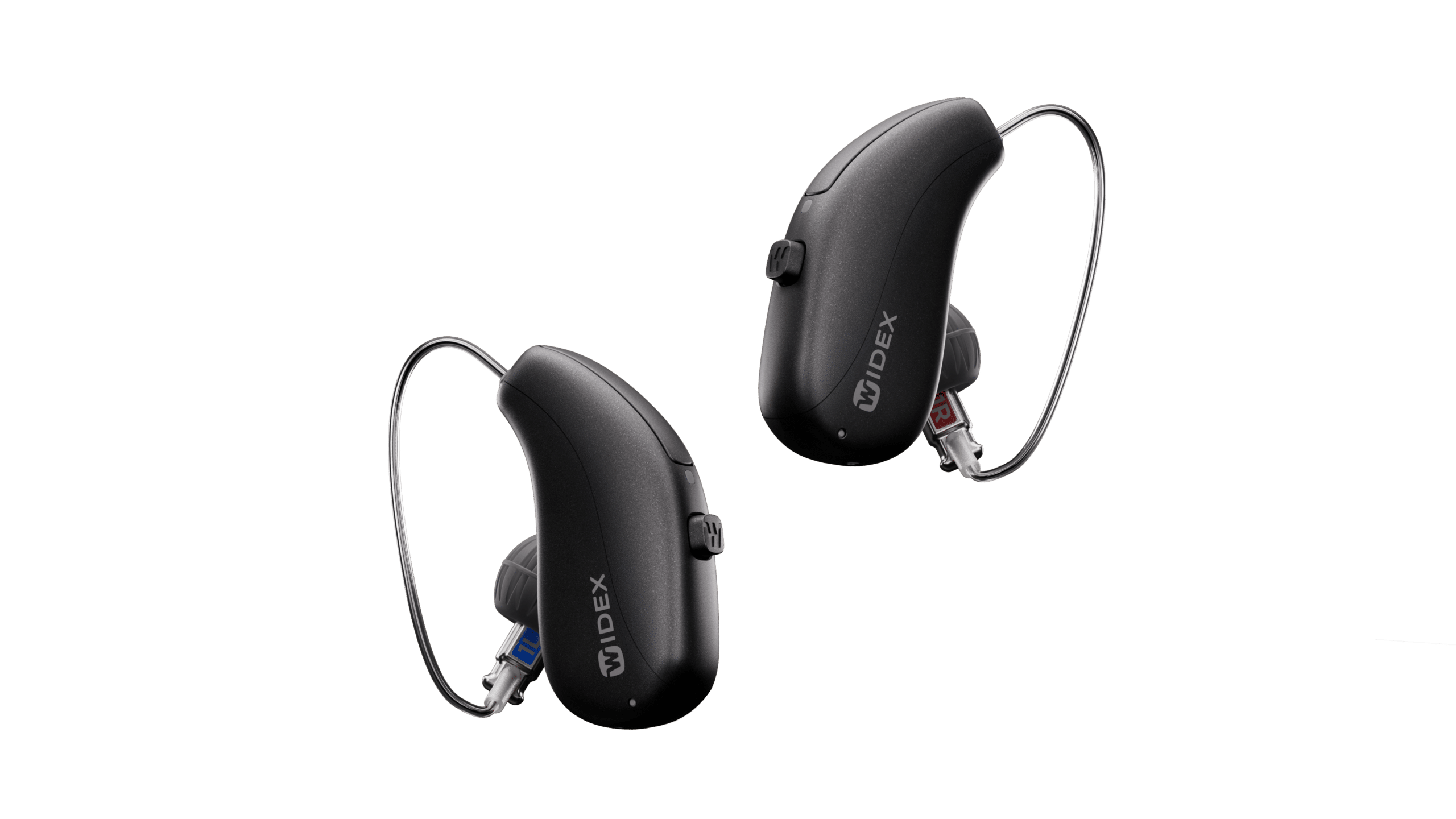
Like its predecessor, it is powered by the proprietary W1 chip with Precision Hearing Technology to provide a natural balance of focus and awareness for daily listening. Features still include Speech Enhancer Pro, Enhanced Sound Classifier, Adaptive Dynamic Feedback Controller, Allure PureSound with ZeroDelay technology, and the Allure Dedicated Streaming Compressor.
The device operates in a Universal program for everyday listening, which is designed to provide a natural balance of focus and awareness. When a wearer enters a more challenging environment, they can activate the Clarity Boost program by pressing the button on their hearing aid. This engages a dedicated AI co-processor and a linear recurrent neural network (L-RNN) purpose-built for audio processing to provide enhanced noise reduction. This user-controlled partnership is designed for patients who prioritize natural sound but want access to powerful support when needed.
The L-RNN architecture was chosen for its efficiency and ability to process audio with minimal delay, which is critical for preserving natural sound quality. The training model also intentionally retains some environmental noise, teaching the network to reduce noise to a comfortable level while preserving important contextual sounds for awareness.
The Future of Hearing Care
A common thread across all new platforms is the integration of Bluetooth LE Audio and compatibility with Auracast broadcast audio in more models. This universal adoption promises a future of greater accessibility in public venues, creating a seamless experience for users regardless of their hearing aid brand that allows them to make greater use of their devices’ AI and other features.
As AI technology continues to advance, the capabilities of hearing aids will only grow. The current landscape shows a clear trend toward specialization, giving HCPs a powerful and diverse set of tools. The challenge and opportunity now lie in deeply understanding these different AI engines to best serve the individual at the heart of hearing care: the patient.
Featured image: AI chip concept. Image: ID 353249873 © Ikorch007 | Dreamstime.com